Warning: This is an X-rated case.
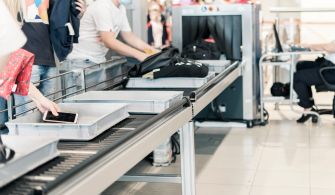
Plaintiff Michelle Leuthauser passed through a security screening checkpoint at the Las Vegas airport on the way to her gate. After a body scan, she was told she had to submit to a “groin search.” She claims that she was sexually abused during the search and tried to sue the Transportation Security Administration (TSA) and the United States for damages. The district court dismissed her suit because it believed TSA Officers are not considered “investigative or law enforcement officers” under the Federal Tort Claims Act (FTCA). The Ninth Circuit disagreed.
A unanimous 3-0 opinion by the Ninth Circuit Court of Appeals, authored by Circuit Judge Jacqueline H. Nguyen, reversed the ruling by James C. Mahan, Presiding District Judge of the U.S. District Court for the District of Nevada on June 26. Plaintiff’s case was remanded for further proceedings. Circuit Judge Lucy H. Koh and Joseph F. Baraillon, District Judge sitting by designation, concurred.
The Ninth Circuit decision ruled that Judge Mahan erred when he issued a summary judgment for the government because of the FTCA’s ‘law enforcement proviso” which “waived sovereign immunity for torts” committed by certain U.S. government officers. He decided that the district court did not have subject matter jurisdiction over Leuthauser’s FTCA claims. Nguyen, however, noted that every circuit that has considered the issue has found that under the plain language of the FTCA, TSOs are investigative or law enforcement officers because they are “empowered by law to execute searches…for violations of Federal law.”
Leuthauser’s nightmare scenario took place in a private room in front of two Transportation Security Officers (TSOs). She claims they told her to stand on a floor mat that had markings to show where she was to put her feet. She was then told by TSO Serrano to “spread her legs far more widely” than the markings indicated. Serrano then patted her down, “slid her hands” along the inside of Leuthauser’s thighs, “touched her vulva and clitoris with the front of her fingers, and digitally penetrated her vagina.” Leuthauser said these actions caused “emotional distress, shortness of breath, uncontrollable shaking and nausea.”
The second TSA officer then dismissed Serrano and completed the plaintiff’s search, which found nothing. Leuthauser reported the incident to airport police, who said they could not do anything because the TSA was not in their jurisdiction. She also learned that the law requires all TSA searches to be done in public and forbids body cavity searches. She sued both Serrano and the United States. The district court dismissed the case against Serrano, and it is not an issue in this appeal. Plaintiff’s case against the United States proceeded because the district court agreed with the government that TSA screeners are not investigative or law enforcement officers.
Judge Nguyen then explained the Federal Tort Claims Act, which gives federal district courts exclusive jurisdiction over claims against the U.S. for “personal injury or death caused by the negligent or wrongful act or omission” of federal employees acting within the scope of their employment. It contains an exemption for claims that arise from assault and other improper actions by investigative or law enforcement officers. Thus, the critical issue in the case is “whether TSOs fall under this definition.”
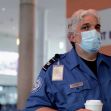
The appellate opinion quickly ruled that they do. They are officers by definition and they even wear badges on their uniforms that say “U.S. Officer.” The government’s argument that TSOs do not have “traditional police powers” and do not “perform traditional law enforcement functions” was not persuasive. The opinion said, “We therefore hold that the law enforcement proviso’s use of the phrase ‘any officer of the United States’ unambiguously includes TSOs.”
The next issue before the Ninth Circuit was whether TSOs are “empowered by law to execute searches, seize evidence, or make arrests for violations of Federal law.” Congress clearly gave TSOs the power to conduct screenings, but the court had to determine if screenings are the same as searches. The common meaning of the terms “screenings” and “searches,” Congressional language used in the Aviation Screening Act, and several precedents all convinced the court that TSOs are “empowered to execute searches.”
The Ninth Circuit dismissed all the government’s additional arguments and found that “sovereign immunity does not bar Leuthauser’s claims for battery and intentional infliction of emotional distress.” Her case was remanded, and she may now proceed with her sexual assault case.
To avoid inappropriate TSO searches in the future, perhaps Congress could instruct all airports to post notices that warn passengers about the possibility of X-rated searches by TSO screeners and what to do should any occur.