DOJ Uses Secretive “Alien Terrorist Removal Court” for the First Time
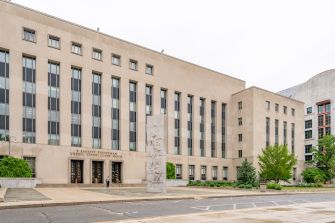
The Justice Department has carried out the first deportation ordered through a little-known federal court created three decades ago to remove noncitizens accused of terrorism using procedures that permit the government to rely on classified evidence.
Nazira Haji Zada, a 47-year-old Afghan national and lawful permanent resident who had been living in Fort Worth, Texas, was removed from the United States after proceedings before the Alien Terrorist Removal Court, or ATRC. Congress created the specialized court in 1996, but no administration had previously brought a case before it.
The Justice Department accused Zada of supporting an ISIS-inspired plot to carry out a mass shooting on Election Day in 2024. Her son, Abdullah Haji Zada, and son-in-law, Nasir Ahmad Tawhedi, were criminally prosecuted in connection with that plot. Zada herself was never criminally charged.
Instead, the government pursued a civil removal case.
The Alien Terrorist Removal Court ordered Zada removed on August 20. The order remained sealed until September 11, after she had been returned to Afghanistan. DOJ said Zada ultimately conceded that she qualified as an “alien terrorist” under the statute and waived her right to appeal.
Her case brought renewed attention to a tribunal that had existed only on paper for 30 years.
Congress created the Alien Terrorist Removal Court as part of the Antiterrorism and Effective Death Penalty Act of 1996. The system was designed for cases in which ordinary immigration proceedings could force the government to disclose sensitive intelligence while trying to remove someone accused of terrorism-related activity.
Ordinary immigration cases generally proceed before immigration judges within the executive branch. The ATRC is structured differently. It consists of sitting federal district judges whom the Chief Justice of the United States Supreme Court designates to serve on the specialized court.
Once appointed to the ATRC, those judges serve in separate roles within the tribunal. U.S. District Judge Joan N. Ericksen serves as the ATRC’s chief judge and presided over Zada’s case.
The ATRC determines whether a noncitizen qualifies as an “alien terrorist” under federal immigration law and should be removed from the country.
The government’s burden is also different from the standard used in criminal court.
Criminal prosecutors generally must prove guilt beyond a reasonable doubt. In an ATRC proceeding, the government must establish by a preponderance of the evidence that the person is removable as an alien terrorist. The judge must therefore find that the government’s position is more likely than not to be true.
That lower civil standard helps explain how Zada could face removal without being indicted for a terrorism offense.
Removal proceedings determine whether a noncitizen may remain in the United States. They do not determine criminal guilt or impose a prison sentence.
The ATRC’s handling of classified information is one of its most unusual features.
Federal law allows a judge to review national-security evidence privately when the Attorney General determines that disclosure could threaten national security or an individual’s safety. The person facing removal may receive an unclassified summary rather than the underlying classified material.
The judge must decide whether the summary gives the person enough information to prepare a defense. If it does not, the government can be required to revise it.
For lawful permanent residents, the statute also allows the ATRC to appoint a specially cleared attorney to review classified material in certain circumstances. That attorney may challenge the information in closed proceedings but cannot disclose it to the resident or the resident’s regular lawyers.
Zada’s attorneys argued that those restrictions raised serious due process concerns.
Federal public defenders representing her challenged the government’s reliance on evidence she could not personally review and questioned whether the process gave her a meaningful opportunity to defend herself.
The Alien Terrorist Removal Court still includes several protections associated with ordinary court proceedings.
Removal hearings are generally open to the public. The person facing removal has the right to be present, represented by counsel and, when financially unable to hire a lawyer, to have counsel appointed. The statute also provides an opportunity to present evidence and cross-examine witnesses, subject to restrictions involving classified information.
The Federal Rules of Evidence do not apply, and some forms of relief ordinarily available in immigration proceedings are unavailable.
The court cannot grant asylum, withholding of removal, cancellation of removal, adjustment of status, or several other forms of immigration relief. If the government proves the person is removable as an alien terrorist, the judge must order removal.
The statute also allows appeals through the federal courts, with review ultimately directed to the U.S. Court of Appeals for the District of Columbia Circuit. Zada waived that right when she agreed to removal.
The government began the case against her on July 15.
She was arrested later that month and appeared publicly before Ericksen on July 30. DOJ said classified information supported its position and also reported providing approximately half a terabyte of nonclassified material to Zada and her federal public defenders.
Her son and son-in-law had already faced criminal prosecution.
Abdullah Haji Zada, who was 17 when arrested, pleaded guilty as an adult and received a 15-year prison sentence. His plea agreement also requires his removal to Afghanistan after he serves his sentence.
Tawhedi pleaded guilty in June 2025 to terrorism-related charges involving attempted material support for ISIS and obtaining firearms and ammunition in furtherance of a terrorism offense.
DOJ says the two men were arrested in October 2024 after purchasing firearms and ammunition from an undercover FBI employee for the planned Election Day attack.
Zada’s case followed a different path because prosecutors did not bring a criminal indictment against her.
The ATRC gave the government a way to seek removal under a civil standard while protecting intelligence it considered too sensitive for ordinary disclosure.
That combination is also why the court has drawn constitutional scrutiny.
Zada’s agreement to removal prevented the first case from producing an appellate ruling on whether the tribunal’s procedures satisfy the Fifth Amendment when a lawful permanent resident faces deportation based partly on classified evidence she cannot personally inspect.
Her attorneys raised that issue. DOJ maintains that Congress designed the system with safeguards including appointed counsel, federal judges and appellate review.
The first use of the ATRC therefore answers one question while leaving another unresolved.
The federal government has now shown that it is willing to use the Alien Terrorist Removal Court in a terrorism-related immigration case.
What remains unsettled is how far the ATRC’s classified-evidence procedures can go before they conflict with constitutional due process protections.
Zada’s removal gives a 30-year-old national-security law its first real-world application. Future cases could determine whether the court becomes a rarely used alternative for extraordinary circumstances or a more significant part of federal terrorism and immigration enforcement.