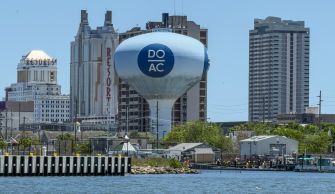
A federal appeals court has revived a proposed class action accusing several Atlantic City casino hotels of using shared, AI-assisted pricing software to coordinate room rates and charge guests more than they would have paid in a competitive market.
The 3rd U.S. Circuit Court of Appeals in Philadelphia ruled Wednesday that the allegations were strong enough to proceed under federal antitrust law. The decision reverses a 2024 dismissal and sends the case back to U.S. District Court in New Jersey.
Companies tied to Caesars Atlantic City, Harrah’s Resort Atlantic City, Tropicana Atlantic City, Borgata Hotel Casino & Spa and Hard Rock Hotel & Casino Atlantic City are named alongside software maker Cendyn Group. Guests who rented rooms at the properties seek to represent a broader class of customers who they claim paid inflated rates.
Rainmaker, a revenue management platform operated by Cendyn, is at the center of the lawsuit. The complaint alleges that participating casinos supplied the system with current, nonpublic information about room rates and occupancy. Cendyn’s platform then combined that material with data from competing properties and issued new pricing recommendations several times each day.
Casino operators remained free to reject the suggested rates, but the complaint claims Rainmaker clients accepted them about 90% of the time. Guests argue that the arrangement reduced the risk that one hotel would lower prices to draw customers away from its competitors.
U.S. District Judge Karen Williams dismissed the case in October 2024 after finding that the complaint did not adequately explain how Cendyn combined or used the information it received. Williams also found that the allegations did not show an agreement among the hotels, which retained final authority over their prices.
Writing for the appeals court, Circuit Judge Theodore McKee said the lower court required more detail about the proprietary software than the guests could provide before gaining access to technical records. At the pleading stage, the panel found, they were not required to describe Rainmaker’s internal workings when much of that information remained under Cendyn’s control.
Section 1 of the Sherman Antitrust Act prohibits agreements among separate businesses that unreasonably restrict competition. Competing hotels may monitor market conditions, use pricing tools, and make similar decisions without breaking the law. An antitrust claim requires facts suggesting the companies joined a common plan rather than set prices independently.
The lawsuit relies on a hub-and-spoke conspiracy theory, which can apply when a central company allegedly coordinates conduct among businesses that would otherwise compete. Cendyn is described as the hub, with the casino hotels as the spokes. Guests claim each property knew its rivals were submitting confidential information and receiving recommendations drawn from the same pool of data.
Similar prices alone do not establish an agreement because competitors often respond to the same economic conditions. Courts therefore look for other signs that the businesses were acting together. The panel pointed to the alleged exchange of current, nonpublic data, the high rate at which hotels accepted Rainmaker’s recommendations, and rising room prices during a period of falling occupancy.
Market figures cited in the complaint form part of that theory. Combined occupancy at the casino hotels allegedly fell by 8% from 2017 to 2019 while room revenue rose by about 22%. The properties also rented 5% fewer rooms in 2022 than in 2019 while charging 25% more, according to the lawsuit.
Guests claim the pricing trends ran against the casinos’ usual incentive to fill rooms because hotel customers may also spend money on gambling, dining and entertainment. The complaint alleges that the shared system allowed the properties to maintain higher rates with less risk that a competing casino would sharply undercut them.
McKee also cautioned that businesses do not violate antitrust law merely because they use the same software. Shared spreadsheets, market research and independent pricing programs are common business tools. The court said the Atlantic City allegations went further because Rainmaker allegedly collected commercially sensitive information from competitors and used it to recommend rates that reduced the chance one casino would undercut another.
A similar lawsuit involving Las Vegas resorts failed at the 9th U.S. Circuit Court of Appeals in 2025, but the court considered a narrower claim based on separate contracts between Cendyn and each hotel. The panel found that those agreements did not restrict how the resorts competed. The Atlantic City complaint instead alleges that rival casinos coordinated through a pricing system that relied on confidential data supplied by competing properties.
Federal antitrust agencies had previously supported the legal theory advanced by the Atlantic City guests. The Justice Department and Federal Trade Commission argued in a 2024 court filing that competitors cannot avoid antitrust rules by using an algorithm to carry out conduct that would be unlawful if handled by employees. The agencies also stated that businesses may face antitrust scrutiny even when they retain final control over their prices.
The ruling clears the way for the guests to seek records about the information supplied to Rainmaker, how the platform generated its recommendations, and how the casino operators used them.