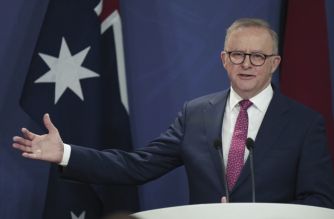
Australia’s Prime Minister Anthony Albanese delivered a firm message to the country's creative sector on Wednesday, promising that Australian writers, musicians, artists and journalists will retain ownership and control over their work as artificial intelligence continues to reshape the economy.
Speaking at the University of Sydney in an address titled "AI in Australia's interests," Albanese made clear that no company would be permitted to use Australian creative output to train AI systems without the artist's consent, including the right to set a price on that work.
The prime minister framed the issue as one of basic ownership, arguing that a creative work belongs to the person who made it, full stop. He suggested Australia is uniquely positioned to set the global standard on this front, noting that no country has yet given artists sufficient authority over how their work is used in AI training. Albanese said that gap in oversight is exactly why Australia should take an active role in shaping how the issue is handled internationally.
As part of the announcement, Albanese revealed the creation of a new Office of AI, effective immediately, tasked with building out national standards for a licensing system rooted in consent and compensation. The move appeared to land well with an industry that has spent years pushing for stronger copyright protections.
Annabelle Herd, the chief executive of the Australian Recording Industry Association, said the prime minister left no room for ambiguity, framing his remarks as confirmation that artists, not government or tech companies, decide the value of their own work. She added that the ability to control pricing and terms of use forms the foundation of any functioning licensing market, and that anything short of that amounts to theft, echoing language Albanese himself had used.
Herd went further, telling AI companies the moment has arrived to begin striking licensing agreements, pointing to a wave of deals already being finalized across the music, journalism and publishing sectors worldwide. She said Australia's creative industries are ready to follow suit.
Music licensing rights group APRA AMCOS offered similar praise, with chief executive Dean Ormston commending Albanese for what he called an unmistakable show of support for the country's artists and rights holders. Ormston said the prime minister's position establishes that AI development in Australia must operate on a foundation of permission and payment, and that the broader creative economy needs to share in the financial upside of AI's growth.
The organization has previously quantified what's at stake. Its AI and Music Report found that without a mandatory licensing system in place, songwriters and composers across Australia and New Zealand stand to lose 23 percent of their revenue, amounting to more than 500 million Australian dollars, roughly $350 million USD, over four years.
Wednesday's announcement follows a string of earlier developments on the issue. Late last year, Attorney-General Michelle Rowland ruled out any copyright exemption for AI training, and in December Australia’s Productivity Commission's final report on data and digital technology concluded it would be premature to overhaul the nation's copyright laws. More than six months later, Albanese has now put his own weight behind a firmer stance.
Industry reaction continued to roll in throughout the day. AMPAL chief executive Damian Rinaldi welcomed the prime minister's recognition that creative work remains the property of its creator, calling his theft framing a clear and forceful signal that permission must come before use. Maggie Collins, who leads the Association of Artist Managers, told the group's members that Albanese had left no doubt about where the government stands, reinforcing that Australian creators will keep authority over their own work as the country moves further into the AI era.