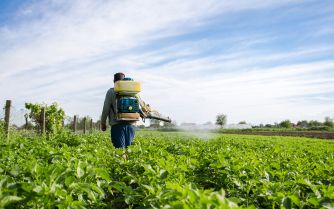
California will begin revealing which pesticides containing PFAS “forever chemicals” are being used on crops across the state under a new law signed by Gov. Gavin Newsom on Sunday, September 27.
Assembly Bill 1603 requires the California Department of Pesticide Regulation to flag pesticides containing intentionally added PFAS in the state’s public pesticide-use database. The department must also publish a separate list of registered pesticides containing the chemicals and provide it to agricultural commissioners in every county.
PFAS, short for perfluoroalkyl and polyfluoroalkyl substances, are a large group of synthetic chemicals commonly called forever chemicals because many persist in the environment. AB 1603 covers intentionally added PFAS used as active, adjuvant or inert ingredients in pesticides.
The law focuses on disclosure and tracking, allowing PFAS pesticides to remain in use while requiring California to identify them in public records. The data will show which registered pesticides contain the chemicals and allow their agricultural use to be tracked over time.
The new disclosure requirements must be in place by January 1, 2028, or when California publishes pesticide-use data covering 2026, whichever comes first. The registered pesticide list is also due by January 1, 2028, and must be updated within 60 days when a new pesticide containing PFAS is registered.
Assemblymember Nick Schultz, a Burbank Democrat who authored AB 1603, initially proposed phasing out agricultural pesticides containing intentionally added PFAS and restricting the registration of new products. Lawmakers removed those provisions before the bill reached Newsom.
Agricultural groups opposed the proposed phaseout, arguing it could eliminate important tools used to control pests and plant diseases. The restrictions were ultimately stripped from the bill.
California and federal regulators use different definitions of PFAS, which affects which pesticides fall into the category. AB 1603 uses a broad definition covering fluorinated organic chemicals containing at least one fully fluorinated carbon atom. The U.S. Environmental Protection Agency has used a definition requiring at least two adjacent fully fluorinated carbon atoms.
California’s broader definition brings more pesticide chemicals under AB 1603’s disclosure requirements. Environmental Working Group, which supported the measure, estimates that about 2.5 million pounds of active ingredients classified as PFAS under the broader definition are applied to California crops each year.
Being classified as a PFAS pesticide does not by itself mean food treated with the product is unsafe. California’s Department of Pesticide Regulation reported that 99% of produce samples labeled as grown in the state and tested in 2023 had pesticide residues below federal tolerance levels.
Health and environmental concerns surrounding PFAS largely stem from the persistence of some of the chemicals. Certain PFAS have been associated with health effects including some cancers, changes in cholesterol and effects on the immune system.
Once the reporting requirements take effect, California’s existing pesticide-use records will allow the public and regulators to identify PFAS pesticides and follow where and how extensively they are being used across the state.