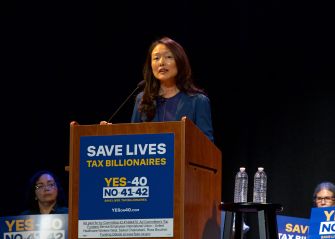
California's proposed 5% billionaire tax was heading toward defeat Tuesday, November 3, 2026, as voters backed a competing constitutional amendment that would prohibit the state from imposing similar taxes on personal wealth.
Proposition 40 had received 43.4% support in preliminary statewide returns, with 56.6% voting against it. Proposition 42, which would prohibit new state taxes on certain financial assets and restrict retroactive taxation, was leading with 54.7% support. Neither result had been called.
The competing measure could block future attempts to tax billionaires' accumulated wealth and would directly conflict with Proposition 40 if both passed. Under California's Constitution, when voters approve conflicting ballot measures in the same election, the provisions receiving more affirmative votes take precedence.
A third measure, Proposition 41, would prevent the state from exempting revenue from new taxes from its constitutional spending limit and require audits of certain tax-funded programs. Proposition 40 included such an exemption, making the two proposals incompatible. Proposition 41 was also trailing, with 47.7% support.
The billionaire tax would have imposed a one-time levy on California residents whose net worth exceeded $1 billion as of January 1, including those who subsequently moved out of state. Payments would begin in 2027, with an option to spread the amount over five years at an additional cost.
Stocks, business ownership interests and other investments would count toward the tax, which targeted roughly 200 billionaires. Real estate and certain retirement assets would generally be excluded.
Service Employees International Union-United Healthcare Workers West, which sponsored Proposition 40, estimated the measure could generate approximately $100 billion over five years. Ninety percent of the proceeds would fund health care programs, with the remaining 10% supporting education and food assistance.
California's nonpartisan Legislative Analyst's Office projected tens of billions of dollars in temporary revenue while warning that changes in wealthy residents' behavior could reduce annual state income tax collections by less than $1 billion.
The proposal divided California Democrats and drew opposition from Gov. Gavin Newsom, Google co-founder Sergey Brin and several business organizations. Newsom warned that the tax could drive wealthy residents and businesses out of California, weakening the state's long-term finances.
Supporters, including Sen. Bernie Sanders and labor organizations, argued that billionaires should contribute more to public programs facing federal funding cuts. Opponents financed a campaign costing hundreds of millions of dollars to defeat Proposition 40 and advance competing tax restrictions.
The dispute extended beyond the proposed levy. Proposition 42 would amend California's Constitution to prohibit new state taxes on ownership of personal property, including financial assets and business interests, and invalidate conflicting taxes enacted after January 1, 2026.
With ballots still being counted, the early results suggested California could reject the billionaire tax while adopting restrictions on future wealth taxation. State election officials will continue processing outstanding ballots before the December 11 certification deadline.