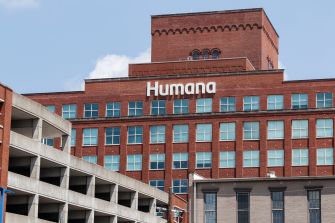
Humana, an industry leader providing healthcare plans for over 5.1 million eligible American seniors, is facing a new class action lawsuit over its claims process. The lawsuit was filed by Medicare Advantage beneficiaries earlier this month in the U.S. District Court in Western Kentucky.
The class action lawsuit names two plaintiffs, one of whom is an 86-year-old Minnesota woman, JoAnne Barrows. The lawsuit details that Barrows slipped and fell at home and suffered a fractured leg as a result. Her doctor told her to keep off of her feet for at least six weeks and outlined a treatment plan for her to follow.
After two weeks, Barrows says that Humana stopped paying for her post-acute care and refused to cover the expenses of continued rehabilitation treatment at a skilled nursing facility her doctor recommended.
When she pushed back against Humana’s decision, Barrows’ "appeals were denied, and Humana deemed Ms. Barrows ready to return home, despite being bedridden and using a catheter," the lawsuit reads.
Barrows would eventually go on to pay out of pocket for her treatment at a less expensive assisted living facility. Once there, she says her condition “deteriorated” because of “substandard care.”
The Humana lawsuit takes issue with an AI algorithm, nH Predict, which is used to predict how long an individual is likely to stay in a skilled nursing facility. Based on the algorithm’s model estimates, the insurer would approve or deny insurance claims.
By relying on the algorithm instead of the professional judgment of a healthcare provider, the Medicare Advantage beneficiaries argue Humana worked "to wrongly deny elderly patients care owed to them under Medicare Advantage plans." In doing so, the lawsuit says Humana is engaging in a fraudulent scheme to reap the benefits of systematically denying claims to people who should have been approved.
In addition to replacing the judgment of a medical professional with an algorithm, the lawsuit accuses Humana of knowing that the algorithm had a high error rate, especially considering it often went against doctor recommendations. The lawsuit also says the use of AI was intentional to help keep costs low and denials high.
The lawsuit maintains, "Humana continues to systemically use this flawed AI model to deny claims because they know that only a tiny minority of policyholders (roughly 0.2%) will appeal denied claims."
Robert S. Gianelli, a Los Angeles insurance attorney with the law firm Gianelli & Morris, who is not involved in the Humana litigation, describes the insurer’s actions alleged in the lawsuit as part of a large and disturbing trend of insurance companies using sophisticated computer algorithms to deny claims without medical review. “Earlier this year it was discovered that Cigna was using a computer algorithm to deny claims on medical grounds, claiming a lack of medical necessity,” Gianelli says. “These claims were instantly rejected without a doctor reviewing the claim as required by law,” says Gianelli, citing the ProPublica investigative report that uncovered these details.
People’s health and lives are at stake, and they need someone to advocate for them and hold insurance companies accountable when they put profits ahead of health
.
— Rob Gianelli, Los Angeles Insurance Attorney
UnitedHealthcare also faced a similar class action lawsuit last year by TeamHealth. That lawsuit accused UnitedHealthcare of routinely denying claims based on diagnostic codes that are run through the insurer's algorithm.
Attorney Gianelli is saddened but not surprised by this latest lawsuit. “Health insurance is big business,” he says. “But when you only look at the numbers to maximize profits and cost-savings, you neglect the fact that real people are behind those numbers. It’s a tragic situation, but people’s health and lives are at stake, and they need someone to advocate for them and hold insurance companies accountable when they put profits ahead of health.”
Humana issued a statement about this new lawsuit through a company spokesman confirming the insurer does use “augmented” intelligence when reviewing claims. However, according to the statement, human input is also considered when AI is used. "Coverage decisions are made based on the health care needs of patients, medical judgment from doctors and clinicians, and guidelines put in place by ," the spokesperson defended.
Amid the background of these lawsuits, lawmakers have been advocating for better practices when assessing claims for seniors who are on Medicare Advantage plans.
In January, the government is expected to release federal rules on how Medicare Advantage plans can and cannot use AI algorithms to deny or accept a claim.
For now, the plaintiffs in the Humana lawsuit are seeking compensatory and punitive damages and other relief. The lawsuit is also asking for a jury trial.
Share This Article
If you found this article insightful, consider sharing it with your network.
Nadia El-Yaouti is a postgraduate from James Madison University, where she studied English and Education. Residing in Central Virginia with her husband and two young daughters, she balances her workaholic tendencies with a passion for travel, exploring the world with her family.
Federal and state regulators have sued Hims & Hers Health, alleging the telehealth company charged hundreds of thousands of consumers for prescription subscriptions without their informed consent and shared sensitive health information with advertising platforms despite promises that its service was private and discreet.The Federal Trade Commission, California, and the...
Read
More »
OpenAI is facing a product liability lawsuit in California from a Florida man who claims ChatGPT provided individualized medical guidance that led him to delay professional care before a serious health emergency.Scott Winters, a 55-year-old former pastor, sued OpenAI and CEO Sam Altman in San Francisco County Superior Court. The...
Read
More »
Massachusetts Attorney General Andrea Joy Campbell has sued UnitedHealthcare Insurance Company, accusing the insurer of receiving more than $100 million in improper MassHealth payments by allegedly overstating the care needs of seniors enrolled in a Medicaid managed-care program.The complaint, filed May 29 in Suffolk County Superior Court, claims UnitedHealthcare, doing...
Read
More »
Plaintiffs allege drugmaker discriminated against older workers with a stated quota to hire more millennials as sales reps.
Drugmaker Eli Lilly and Co is at the center of a class-action lawsuit after two one-time job applicants filed a complaint last week that argues the company unfairly discriminated against older workers....
Read
More »
A New York investigative journalist has sued Grammarly, accusing the popular writing platform of using the names of writers and journalists without permission in a paid artificial intelligence feature that generated feedback as if it came from real authors and editors.
Julia Angwin filed the class action lawsuit on March...
Read
More »