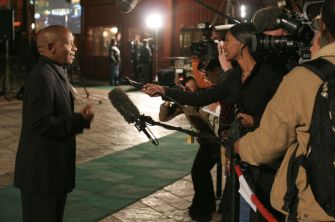
The South African musician behind the famous opening chant in "The Lion King's" "Circle of Life" has walked away from his lawsuit against a comedian who poked fun at the song online, but the case isn't over yet. The comic's legal team now intends to go after the composer for reimbursement of their attorney's fees, arguing the suit should never have been filed in the first place.
A federal judge tossed out the case on Friday, just shy of four months after Lebo M, whose given name is Lebohang Morake, initially took legal action against comedian Learnmore Jonasi, also known as Learnmore Mwanyenyeky. The dismissal came about because Morake himself had agreed to withdraw the suit voluntarily, rather than because a judge ruled against him on the merits.
The decision to drop the case followed pressure from Jonasi's lawyers, who had asked the court to throw it out entirely, describing the litigation as a sham designed to punish the comedian for exercising his free speech rights. Had that motion succeeded, it would have ended the case outright and cleared the way for Jonasi to seek repayment of what were described as substantial legal costs from Morake.
Even though the case ended through a voluntary dismissal, the judge made clear that Jonasi could still pursue those same financial penalties, which exist under law specifically to discourage lawsuits that chill free expression.
Morake offered his own account of events in a lengthy Instagram post, pushing back against what he called overly dramatic media coverage of the dismissal. He insisted the two sides had reached a mutual agreement to resolve the dispute and maintained that he hadn't lost in court. He also described his general preference for open dialogue rather than drawn-out legal battles, framing the resolution as consistent with that approach.
The dispute traces back to a lawsuit Morake filed in March over "Nants'ingonyama bagithi Baba," the Zulu-language chant that opens "Circle of Life," the first song on the enormously popular 1994 "Lion King" soundtrack. Morake both wrote and performed that portion of the track, which carries a meaning along the lines of declaring allegiance to a king.
The conflict stemmed from a February appearance Jonasi made on the podcast One54 Africa, during which he joked that the famous chant actually translates to something far more mundane, essentially, a surprised exclamation about spotting a lion. The bit took off online, racking up well over 100,000 likes on the podcast's Instagram and hundreds of thousands of views on YouTube.
Morake had sought $27 million in damages, accusing Jonasi of defamation and describing the joke as a distorted mockery of his artistic work made purely for profit. From a legal standpoint, the case faced steep obstacles from the start, since the First Amendment generally provides strong protection for comedic and creative expression against defamation claims.
After Jonasi's legal team moved to dismiss the original complaint in May, Morake attempted to revive the case by adding new claims centered on federal trademark law, a legal theory that also tends to be difficult to win in American courts.
Jonasi's attorneys quickly moved to dismiss that amended version as well, arguing it improperly used trademark claims as a workaround to punish speech that happened to offend the plaintiff.
Rather than fight that second dismissal motion, Morake's lawyers ultimately joined with Jonasi's legal team to file a joint request last week agreeing to drop the case entirely.
The dismissal was filed without prejudice, technically leaving the door open for Morake to refile at a later date, though the agreement specifically preserved Jonasi's ability to pursue attorney's fees under California's anti-SLAPP statute, a law built to deter lawsuits aimed at suppressing speech.
Jonasi's attorney confirmed that his client plans to do exactly that, framing the original lawsuit as groundless and an infringement on his client's constitutional rights.