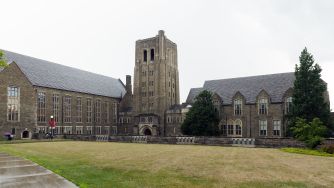
Cornell University has banned parties and social events at fraternity houses for the remainder of the 2026-27 academic year after a former student accused seven fraternity members of drugging and gang-raping her. Any chapter that violates the restrictions faces an immediate emergency suspension under the university's new zero-tolerance policy.
University President Michael Kotlikoff announced the restrictions Tuesday, October 13, 2026, alongside plans to involve New York State Police in sexual assault investigations on campus. Cornell will work with specially trained investigators who operate independently of the university, bringing outside law enforcement into cases traditionally handled by Cornell University Police.
The suspension applies to social gatherings inside houses affiliated with Cornell's Interfraternity Council, which represents more than 20 active fraternities. Kotlikoff said the university would assess whether fraternity life can safely continue and under what conditions.
The decision follows a civil lawsuit filed September 14 by a former student identified as Jane Doe, who alleges that seven members of the Chi Phi fraternity sexually assaulted her at their fraternity house in October 2024.
According to the complaint, Doe was heavily intoxicated and pressured into consuming ketamine before being raped by multiple men over several hours. The accused men have denied wrongdoing, with some maintaining that sexual activity was consensual and others disputing their involvement.
Doe also sued Cornell and other defendants, alleging that the university failed to protect her and inadequately oversaw fraternity activities and campus safety. Her claims place the university's handling of sexual misconduct allegations and its responsibility to protect students at issue in the civil litigation.
Cornell expelled two students, imposed additional disciplinary sanctions, including suspensions, and permanently barred Chi Phi's Xi chapter from campus. Its campus police department investigated the allegations and referred its findings to Tompkins County District Attorney Matthew Van Houten, who initially declined to bring criminal charges.
New York Gov. Kathy Hochul appointed Attorney General Letitia James as special prosecutor on October 2, transferring the case from Van Houten after he reopened the investigation amid public criticism. James now oversees the criminal inquiry and has authority to determine whether the evidence supports charges against any of the accused men.
Thousands of students and community members demonstrated on campus October 5, demanding greater accountability and changes to Cornell's response to sexual violence. A seven-hour sit-in followed October 7, while faculty members introduced a resolution expressing no confidence in the administration's ability to address sexual assault. Cornell's Faculty Senate is scheduled to consider the resolution Wednesday, October 14.
Cornell said it will also hire a dedicated case manager to assist students reporting sexual misconduct, add victim advocates, and expand prevention education. The university also plans to strengthen bystander intervention programs and fund social alternatives outside the fraternity system.
Former Deputy U.S. Attorney General Sally Yates is leading a separate independent review commissioned by a special committee of Cornell's Board of Trustees. Retained on October 6, Yates and her team at King & Spalding will examine the university's handling of Doe's allegations, its procedures for responding to sexual misconduct, the role of campus police and other law enforcement agencies, and oversight of fraternity life.
The trustees have pledged to share the review's findings and recommendations with the Cornell community, although they have not specified whether the full report will be made public. Because Yates was retained through an outside law firm, attorney-client privilegeAttorney-client privilege protects confidential communications between a lawyer and a client when they are made for the purpose of seeking or providing legal advice. The privilege generally allows the client to prevent those communications from being disclosed in court or during litigation.Read more → could limit what Cornell is required to disclose, raising questions about the extent of the university's promised transparency. Cornell has not announced when the review will be completed.
Share This Article
If you found this article insightful, consider sharing it with your network.
Alexandra Agraz is a former Diplomatic Aide with firsthand experience in facilitating high-level international events, including the signing of critical economic and political agreements between the United States and Mexico. She holds dual associate degrees in Humanities, Social and Political Sciences, and Film, blending a diverse academic background in diplomacy, culture, and storytelling. This unique combination enables her to provide nuanced perspectives on global relations and cultural narratives.
New York Attorney General Letitia James’s office has opened a review into Cornell University’s handling of allegations that seven Chi Phi fraternity members drugged and gang-raped a student in 2024, as prosecutors prepare to take the underlying case before a grand jury.The Attorney General’s Office confirmed Wednesday, September 30, 2026,...
Read
More »
Chicago police are investigating an alleged sexual assault at a University of Chicago fraternity house after a 21-year-old woman reported being attacked during a party early Sunday morning, prompting the fraternity's national organization to halt all chapter events.The alleged assault occurred around 1:50 a.m. on October 11, 2026, at the...
Read
More »
A New York judge has ordered Attorney General Letitia James and Gov. Kathy Hochul to respond to a legal challenge seeking to remove James from the Cornell 7 rape investigation, as a second man accused in the case moves to block her involvement over allegations that she prejudged their guilt.State...
Read
More »
The University of Arizona has suspended activities across all 21 of its Interfraternity Council chapters as the school investigates a wave of misconduct allegations involving nearly half of its fraternities, including claims of hazing, physical assault, drugs and alcohol.Dean of Students Chrissy Lieberman announced the interim action in an October...
Read
More »
Ithaca Mayor Robert Cantelmo is seeking to halt city permits for Cornell University student events, including Greek life gatherings, as scrutiny intensifies over the university’s handling of sexual assault allegations involving members of the Chi Phi fraternity.Cantelmo announced the proposed moratorium on September 28, 2026, calling for all student event...
Read
More »
We use cookies and similar technologies to help our website function, understand how visitors use our site, and improve your experience. Some cookies are necessary for the website to operate, while others may be used for analytics or advertising.