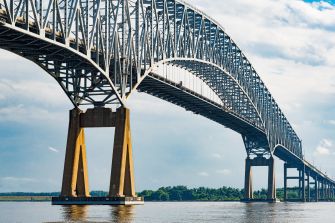
Federal prosecutors have filed criminal charges tied to the 2024 collapse of Baltimore’s Francis Scott Key Bridge as Maryland finalized a $2.25 billion settlement with the owner and operator of the cargo ship involved in the disaster.
The charges announced Tuesday accuse Singapore-based Synergy Marine Pte Ltd., its affiliated maritime company Synergy Maritime Pte Ltd., and a technical superintendent tied to the M/V Dali of knowingly relying on a fuel pump system prosecutors argue could not properly restart after a blackout and contributed to the fatal crash. According to the indictment, the Dali lost electrical power twice within minutes while departing the Port of Baltimore on March 26, 2024, before striking a support column of the Francis Scott Key Bridge.
Authorities allege the vessel’s operators deliberately continued to use the pump system despite earlier electrical failures and known concerns about similar equipment aboard sister ships. Investigators also claim the companies failed to report hazardous conditions to the U.S. Coast Guard properly and later provided false information to federal officials examining the incident.
Six construction workers repairing potholes on the bridge were killed when the structure collapsed into the Patapsco River. Two other workers were injured. Prosecutors also accused the companies of releasing pollutants into the river, including shipping containers and their contents.
Synergy Marine denied wrongdoing and stated it intends to contest the allegations. Attorney David Gerger, who represents technical superintendent Radhakrishnan Karthik Nair, also denied his client caused the crash.
Maryland Attorney General Anthony Brown finalized a $2.25 billion settlement Tuesday with Grace Ocean Private Limited and Synergy Marine, resolving major civil claims tied to the destruction of the bridge and the economic disruption that followed.
The civil lawsuit filed by Maryland against the companies alleged the vessel was unseaworthy and should never have left port. Under maritime law, a vessel can be considered unseaworthy if critical equipment or operating conditions make the ship unsafe for normal operation. State officials sought damages connected to the destruction of the bridge, environmental harm, lost toll revenue, shipping disruptions at the Port of Baltimore, and broader economic losses felt throughout the state.
The Attorney General’s Office stated the agreement reflects what the state determined was the maximum recovery available from the shipowner and operator after reviewing available insurance coverage and financial resources.
A major legal fight in the litigation centered on a federal maritime law known as the Limitation of Liability Act of 1851, which can allow shipowners to limit damages after a maritime accident to the post-incident value of the vessel and its cargo. Grace Ocean and Synergy Marine previously attempted to limit their exposure to roughly $43.7 million, which represented the estimated value of the Dali after the collision.
The law dates to the nineteenth century and was designed to protect maritime commerce, but modern infrastructure accidents have renewed scrutiny over whether shipowners should be able to sharply limit damages after catastrophic events. Courts can reject those protections if investigators or claimants show vessel owners knew about dangerous conditions before a ship left port.
The National Transportation Safety Board’s final report, released in November 2025, concluded the crash was entirely preventable and traced the Dali’s initial blackout to a loose signal wire inside the vessel’s electrical control system. Investigators also identified Hyundai Heavy Industries, the shipbuilder, as sharing responsibility for the power loss that preceded the collision. Maryland officials stated that the settlement does not resolve the state’s separate claims against Hyundai, which the Attorney General’s Office intends to continue pursuing.
Portions of the remaining civil litigation had been scheduled for trial on June 1, though attorneys involved in the case indicated the criminal indictment could affect the timing of future proceedings. State attorneys also confirmed additional civil claims tied to the bridge collapse remain ongoing.