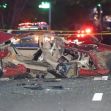
Special state laws give personal injury victims an extra means of compensation after a drunk driving car accident.
Drunk driving accidents can be violent and destructive. The victims of these accidents can be left with exorbitant costs, sometimes suffering a permanent loss of physical mobility or even a traumatic brain injury that inhibits cognitive function. In some cases, those found responsible for drunk driving accidents are uninsured or underinsured and lack sufficient personal assets to be able to fully compensate their victims. Some New York drunk driving accident victims may have another avenue through which to seek money damages for their injuries, known as dram shop or social host liability.
What is New York’s Dram Shop Act?
A Dram Shop law is an old-fashioned name for a very modern problem. “Dram shop” is an antiquated term for bar or pub that refers to “drams,” a now-obsolete unit of measurement for alcohol. In essence, these laws impose financial responsibility on bars or restaurants that serve alcohol to someone they weren’t supposed to who then goes on to injure a third party. It is illegal in New York to serve alcohol to someone who is underage, who is of legal drinking age but who is already visibly intoxicated, or to a so-called “habitual drunkard.” New York alcohol vendors can be held responsible for the injuries an intoxicated person causes if that vendor’s sale of alcohol to the intoxicated person was illegal under the aforementioned definition.
Dram shop laws apply not just to car accident victims where the other driver was drunk. If an intoxicated person trips into another person and causes the victim to fall and become injured, or who assaults the victim due to their intoxication, the institution that overserved the stumbler or aggressor may be liable for the victim’s injuries. Dram shop laws can also be used to seek compensation for property damage caused by intoxicated persons.
Proving liability under New York’s dram shop laws
In order to succeed on a dram shop claim, a victim of an accident or assault must prove that:
· The victim suffered injuries due to someone else’s actions,
· The person who caused those injuries (known as a “tortfeasor”) was intoxicated at the time that those injuries were caused,
· The vendor sold alcohol to the visibly intoxicated (or underage) tortfeasor, and,
· The tortfeasor’s intoxication was a substantial factor in causing the victim’s injuries.
In other words, a bar or restaurant may be required to pay damages to a victim of a drunk person’s aggression or negligence when that bar or restaurant continued serving the drunk person after it was clear that the person was drunk, or sold alcohol to someone under the legal drinking age.
Proving visible intoxication is on top of also having to prove that the seller of alcohol knew or should have known that the customer was already intoxicated.
— Kevin Kohn, Personal Injury Attorney
Importantly, accident victims don’t have to choose between suing either the drunk drivers or the establishments that overserved them. According to personal injury attorney Kevin Kohn of The Bronx-based Kohn Law Firm, accident victims can choose to sue either party or both. When two parties are liable to an injury victim, they could be held jointly liable for the damage done, or either one could be held entirely liable for damages. One exception is that defendants who are less than 50% at fault are only liable for a limited amount of non-economic (pain and suffering) damages. Attorney Kohn also points out that the legal standard applied to the seller of alcohol is different under the dram shop liability law than the general negligence standard which applies to the drunk driver. This different standard is an important fact to consider when choosing how to proceed on a personal injury claim, says Kohn.
One of the biggest obstacles in many dram shop liability cases is proving “visible intoxication,” according to Kohn. “This must be proved by circumstantial evidence which in many instances requires eyewitness accounts,” he says. Further, Kohn adds that “proving visible intoxication is on top of also having to prove that the seller of alcohol knew or should have known that the customer was already intoxicated.”
Social hosts can be liable for drunk driving accidents
It isn’t only commercial alcohol vendors who can be held financially responsible for the bad behavior of drunk people. A host of a party or gathering in New York who is providing alcohol to their guests for free (i.e., isn’t selling alcoholic drinks) is considered a “social host.” Social hosts can face liability for injuries caused by intoxicated persons if they served alcohol to or helped to procure alcohol for a person who was not yet of legal drinking age. To prove these claims, the victim must prove that:
· They were injured by an intoxicated person under the age of 21,
· The intoxication was a substantial factor in causing their injuries,
· A social host knew or had reasonable cause to believe that the individual was not of legal drinking age, and
· The social host served alcohol to or helped to procure alcohol for the underage, intoxicated tortfeasor.
Unlike laws applying to dram shops, New York law will not hold a social host liable for injuries caused by a drunk person over the age of 21 whom the social host served alcohol after it was clear that the person was drunk. Social host liability for injuries caused by intoxicated persons only applies when the intoxicated person was not of legal drinking age.
Share This Article
If you found this article insightful, consider sharing it with your network.
Candice Pillion is a labor and employment attorney and writer. She shares her home with Louie, a very hard-of-hearing 13-year-old miniature pinscher. When she isn’t at her computer, you’re likely to find her hiking, lifting heavy things, or feeding her sourdough starter.
California has enacted a new law that will limit the medical expenses some people can recover after accidents involving Uber, Lyft and other ride-hailing services.Gov. Gavin Newsom signed Senate Bill 623, known as the Fair Medical Billing and Rideshare Safety Act, on June 25. The law also imposes annual background-check...
Read
More »
The parents of a teen driver who was involved in a car crash that turned deadly last year have been sentenced following guilty pleas on charges in connection with their son’s actions.
Sean Smith, 40, and Deo Ramnarine, 43, are the parents of a 17-year-old boy who was behind the...
Read
More »
Former New York City Mayor Bill de Blasio was recently hit with a personal injury lawsuit after a woman tripped on the sidewalk outside his home. The Brooklyn woman claims the sidewalk was improperly maintained and named the former Mayor as well as the City of New York in her...
Read
More »
A Texas jury has awarded an eye-popping settlement in a $301 billion lawsuit against a Corpus Christi bar. The lawsuit was brought forward by the family of a woman and her 16-year-old daughter, both of whom were killed by a drunk driver who was served alcohol at the bar.
The...
Read
More »
A truck driver was recently killed in an accident on Grand Avenue in Queens, New York, after striking a street pole. Police suspected the man had a medical episode while behind the wheel, which ultimately led to the fatal accident. The accident occurred just hours after another trucker was killed...
Read
More »