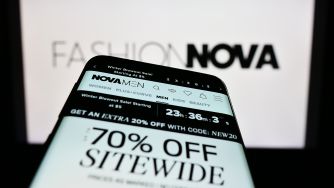
A proposed class action filed in federal court in California accuses fast-fashion retailer Fashion Nova of violating federal telemarketing laws by allegedly sending promotional text messages to consumers before the legally permitted 8 a.m. cutoff.
The lawsuit was filed in April by Alameda County resident Charleen Shavies in the Northern District of California. According to the complaint, Shavies received at least eight promotional text messages from Fashion Nova between June and August 2025, including several shortly after 7:20 a.m. The messages allegedly advertised discounts and linked customers directly to the retailer’s website.
Court filings allege that the messages violated the Telephone Consumer Protection Act, commonly known as the TCPA, a federal law that restricts certain telemarketing practices and limits when companies may contact consumers with promotional communications. The lawsuit argues that the retailer’s early morning texts amounted to unlawful telephone solicitations sent during federally protected quiet hours.
Shavies also claims she never consented to receive marketing texts from Fashion Nova and had not purchased products from the company in the 18 months before the messages allegedly began.
Congress enacted the TCPA in 1991 after growing complaints about intrusive telemarketing calls reaching consumers at home during early morning and late evening hours. Federal Communications Commission rules tied to the law generally prohibit companies from sending telephone solicitations before 8 a.m. or after 9 p.m. local time, restrictions often referred to as quiet hours.
The law was written before promotional text marketing became common, and courts are now weighing how those restrictions apply as more businesses use text messages to advertise sales and discounts directly to consumers. Some companies have argued that portions of the TCPA were written to regulate phone calls rather than text messaging.
Fashion Nova raised a similar argument in separate litigation filed in Indiana, where another consumer accused the retailer of sending promotional messages despite his placement on the national do-not-call registry. The case is paused while the Seventh Circuit Court of Appeals considers whether text messages qualify as “calls” under portions of the statute.
Fashion Nova, a Los Angeles fast-fashion retailer known for its social media marketing, built a large online following through influencer campaigns and direct digital advertising aimed at younger consumers.
Under the TCPA, companies can face statutory penalties of up to $500 for each unlawful communication and up to $1,500 per violation if a court finds the conduct was willful or knowing. The amount can increase substantially depending on how many consumers are included in the proposed class action.
Shavies is also seeking an injunction that would block Fashion Nova from sending promotional texts during quiet hours in the future, along with a jury trial.
Fashion Nova has not formally responded to the complaint.