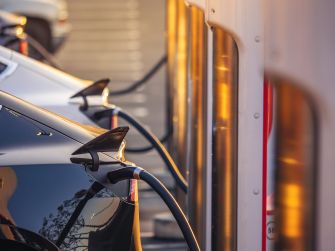
Wisconsin will retain tens of millions of dollars in federal funding for electric-vehicle charging infrastructure after a federal judge ruled that the Trump administration unlawfully sought to withhold money allocated to the states.
In a decision issued earlier this month, U.S. District Judge Tana Lin of the U.S. District Court for the Western District of Washington found that the administration violated the Administrative Procedure Act when it sought to pause or block funding under the National Electric Vehicle Infrastructure Formula Program, commonly known as NEVI. The ruling prevents the federal government from freezing funds that Congress had already approved for state transportation projects.
According to the Wisconsin Department of Justice, the state stood to lose approximately $62 million if the funding freeze had gone into effect. State officials said the money supports not only the installation of electric vehicle charging stations but also jobs and economic activity tied to transportation and energy infrastructure.
Wisconsin Attorney General Josh Kaul joined the lawsuit in May 2025, alongside attorneys general from 15 other states, including Arizona, California, Colorado, Illinois, Minnesota, New Jersey, and Washington. In a statement released January 27, Kaul said the ruling protected funding that lawmakers had authorized and that states were already preparing to use.
State officials welcomed the decision, while federal officials defended the administration’s approach. In a statement following the ruling, the U.S. Department of Transportation said it had worked to align the electric vehicle program with the Trump administration’s priorities and had increased the pace of approving state plans and obligating funds under revised NEVI guidance.
The lawsuit centers on how federal agencies may administer programs created and funded by Congress. The NEVI program was established to help build a nationwide network of electric vehicle charging stations, with states allowed to use federal grants for chargers at locations such as gas stations, hotels, and restaurants. The program also supports planning related to pollution reduction and clean energy adoption.
At the heart of the dispute is the Administrative Procedure Act, a federal law that sets rules for how executive agencies create, change, or suspend policies. The law is intended to ensure that agencies act within the authority granted by Congress and follow transparent procedures when making decisions that affect states, businesses, or the public. Courts often rely on the statute when agencies attempt abrupt policy shifts or seek to halt existing programs without a clear legal justification.
The states argued that Congress had already approved and funded the NEVI program, leaving the executive branch with limited discretion to block the money. According to court filings, the administration attempted to delay or condition the funding without following required procedures, including public notice and a reasoned explanation. Judge Lin agreed, concluding that the administration’s actions exceeded its authority under federal law.
The ruling also reflects a broader constitutional principle governing federal spending. While executive agencies are responsible for administering federal programs, Congress controls how federal funds are allocated. When agencies attempt to withhold or redirect money that lawmakers have already appropriated, courts may intervene to determine whether the executive branch has acted beyond its lawful role.
The case produced practical effects even before the final judgment. In November, an earlier court order in the same lawsuit resulted in the release of funding for 26 electric vehicle charging stations in Wisconsin, allowing several projects to move forward while the litigation continued.
Multistate lawsuits like this one have become a common legal tool when federal actions affect nationwide programs. States often bring joint cases to challenge policies that carry broad financial or regulatory consequences, particularly when infrastructure funding or public services are involved.
Beyond Wisconsin, the ruling has implications for how states plan long-term infrastructure investments. Electric vehicle charging networks require coordination among state agencies, private contractors, and local governments. Funding disruptions can delay projects and increase costs when states rely on federal dollars to support transportation budgets.
According to public records, Kaul has joined nearly 40 multistate lawsuits against the Trump administration, challenging policies and funding decisions across a range of areas. Wisconsin officials say those cases have helped preserve billions of dollars for projects, including transportation improvements and public health initiatives.
The decision does not resolve every dispute surrounding the NEVI program or federal transportation funding. The Department of Transportation continues to oversee how funds are distributed and how state plans are approved. However, the ruling establishes that the administration cannot suspend funding approved by Congress without complying with federal law.