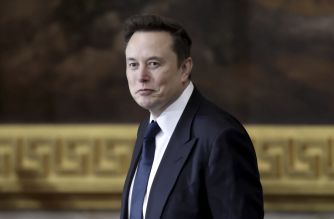
A federal judge in California dismissed Elon Musk’s lawsuit against OpenAI on Monday after a jury found he waited too long to pursue claims accusing the company of departing from its founding nonprofit mission.
The ruling followed a three-week trial in Oakland focused on OpenAI’s corporate structure, its partnership with Microsoft, and disputes among the company’s early leadership over control of the organization and its direction.
OpenAI launched in 2015 as a nonprofit artificial intelligence research lab focused on developing advanced AI systems safely and for public benefit. The organization later adopted a capped-profit structure that allowed outside investment while nonprofit leadership retained oversight, leading to a multibillion-dollar partnership with Microsoft as ChatGPT helped drive the company’s rapid growth.
Musk, one of OpenAI’s co-founders, invested roughly $38 million into the organization during its early years. The complaint argued OpenAI Chief Executive Sam Altman and company president Greg Brockman shifted the company’s structure and operations away from the nonprofit model established during its founding.
The lawsuit relied partly on charitable trust law, which can restrict nonprofit organizations from using charitable assets or missions in ways that conflict with the public purpose they were created to serve. Musk argued OpenAI’s capped-profit structure and partnership with Microsoft violated those nonprofit obligations.
OpenAI argued the company never promised to remain a nonprofit permanently and maintained Musk had been aware of its corporate structure for years. Attorneys for the company also pointed to Musk’s launch of xAI, his own artificial intelligence company, in 2023.
Testimony during the trial focused on disagreements between Musk and OpenAI leadership over funding, governance, and control of artificial general intelligence, commonly known as AGI. The term refers to a theoretical form of AI capable of performing human-level tasks across many fields.
Altman testified that OpenAI’s founders did not want advanced AI systems controlled by a single individual. Proceedings also revisited OpenAI’s 2023 board dispute, when Altman was briefly removed as chief executive before returning days later. Musk argued the episode reflected deeper governance problems inside the organization, while OpenAI maintained the lawsuit was driven by business competition rather than nonprofit accountability.
Judge Yvonne Gonzalez Rogers dismissed the lawsuit after the advisory jury found Musk waited too long to bring the claims. Jurors concluded Musk had been aware for years of OpenAI’s corporate structure, leadership disputes, and commercial direction, placing the lawsuit outside the applicable filing deadlines.
Musk sought damages tied to OpenAI’s charitable arm as well as Altman’s removal from OpenAI’s board. His legal team stated Monday that it intends to appeal the dismissal.