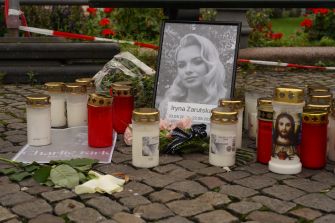
The family of Iryna Zarutska, the 23-year-old Ukrainian woman fatally stabbed aboard a Charlotte light rail train last year, plans to file a civil lawsuit around the first anniversary of her death as a new state audit details security and fare enforcement problems within the city's transit system.
Attorney Lauren Newton, who represents Zarutska's family and estate, said the lawsuit is expected around Aug. 22, one year after the killing. Newton has not publicly identified all parties the family intends to sue or the specific legal claims it will bring.
Zarutska had moved to Charlotte after fleeing the war in Ukraine. Authorities say she was returning home from work on a LYNX Blue Line train when Decarlos Brown Jr., a passenger she did not know, attacked her within minutes of her boarding. Brown was arrested after leaving the train and has been charged with first-degree murder in state court and a federal offense involving violence against a mass transportation system resulting in death.
The planned civil action follows an Aug. 17 report from the North Carolina Office of the State Auditor examining safety and security at the Charlotte Area Transit System, known as CATS. The auditor said its findings generally reflect conditions when Zarutska was killed and found that the light rail system had no gates or turnstiles to deter riders from entering without tickets and lacked adequate procedures for addressing fare evasion.
Brown allegedly boarded a CATS bus and later the light rail without paying before the attack. The audit also identified limited coordination between CATS and the Charlotte-Mecklenburg Police Department, including the absence at the time of a direct connection between transit surveillance cameras and the department's Real Time Crime Center.
Newton has pointed to the findings while discussing the coming lawsuit, arguing that physical barriers could have prevented Brown from boarding the train. Her argument could make the condition of the transit system before Zarutska's death an important part of any negligence claims ultimately brought by the family.
CATS says it has strengthened security since Zarutska's death. The transit system says it has increased visible security and off-duty police coverage, expanded fare enforcement and connected its cameras to the police Real Time Crime Center. Interim CEO Brent Cagle said CATS has tripled its security budget since 2023 and plans to introduce a 60-person fare enforcement team this fall.
The planned case could raise a central question in negligence law: when can an organization be responsible for failing to protect someone from a crime committed by another person? North Carolina law generally does not require a person or organization to prevent someone else's criminal acts, but courts recognize exceptions when a particular relationship creates a duty to provide protection.
The North Carolina Supreme Court has recognized that common carriers owe duties to their passengers and may be responsible for failing to protect them from violence when an assault could have been reasonably foreseen and avoided through proper care. Common carriers generally include transportation services that carry members of the public, making the rule particularly relevant to disputes involving passenger safety.
Foreseeability is central to that rule. A transit operator is not automatically responsible whenever one passenger attacks another, and the law does not require protection against every possible danger. A negligence claim generally requires proof that a legal duty existed, reasonable care was not taken, and the failure was sufficiently connected to the injury.
The family would not necessarily have to show that transit officials could have predicted that Brown specifically would attack Zarutska. Depending on the claims eventually filed, the case could instead examine whether the broader risk of violence was reasonably foreseeable and whether alleged security failures contributed to her death.
North Carolina's wrongful death law may provide another part of the legal framework. The statute allows the personal representative of someone who has died to seek damages when the death resulted from another person's wrongful act, neglect or default. Newton has not yet disclosed whether the complaint will include a wrongful death claim.
Brown's state and federal criminal cases remain pending separately from any civil claims arising from Zarutska's death. As of Aug. 20, the family's civil complaint had not been filed.