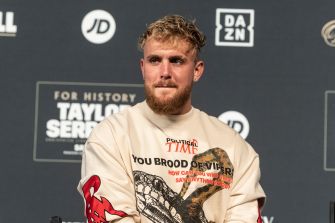
Betr, the betting platform co-founded by Jake Paul, is refusing HBO’s demand to pull a commercial reuniting former “Entourage” stars Jeremy Piven and Adrian Grenier, arguing that the network is trying to claim ownership over elements it previously persuaded courts were too generic to protect.
HBO sent the company a cease-and-desist letter over the three-minute advertisement, which places Piven and Grenier in a luxury setting that closely recalls their former roles as Hollywood agent Ari Gold and actor Vincent Chase. The network argues that the setting, clothing, dialogue, manner of speech and overall presentation evoke “Entourage” so closely that the commercial infringes its intellectual property.
The letter threatens legal action unless Betr removes the spot. The company has refused.
In its response, Betr maintains that HBO owns “Entourage,” but does not own Piven or Grenier. Neither actor is identified as his former character, and the commercial does not use the show’s name, footage, dialogue or music. Instead, the company says viewers are recognizing two performers with a well-known history together.
That distinction sits at the center of the copyright fight. Copyright protects original creative expression, including sufficiently distinctive characters, dialogue and combinations of expressive elements. It generally does not give a rights holder exclusive control over broad ideas, familiar settings or stock scenes simply because audiences associate them with a particular show.
HBO also would not necessarily need to show that Betr copied actual footage or repeated dialogue word for word. A copyright claim can turn on whether protected elements of one work were copied closely enough to make the two substantially similar. The dispute therefore centers on where the “Entourage” references stop being a nostalgic callback and begin reproducing creative expression HBO can legally protect.
Betr has pointed directly to HBO’s own history defending that boundary.
Its response cites copyright cases involving “Ballers” and “Six Feet Under,” both of which ended in HBO’s favor. In the “Ballers” litigation, HBO successfully argued that similarities involving wealthy lifestyles, parties, athletes and other familiar features of the show were not enough to establish infringement.
Betr contends HBO is now taking the opposite position over similarly broad elements in its commercial, including luxury surroundings, celebrity culture and fast-talking characters. The company has asked HBO to identify the specific protected material from “Entourage” that it believes the advertisement copied.
The commercial itself makes the connection difficult to miss. Piven moves through a lavish mansion party before finding Grenier aboard a yacht, where he pitches him a movie role. Their interaction echoes the relationship between Ari Gold and Vincent Chase without directly naming either character.
“Entourage” creator Doug Ellin has also criticized the campaign and made clear that he had no involvement in writing it. Betr seized on those remarks as support for its position that viewers understand they are watching a separate advertisement rather than an official continuation of the HBO series.
The company’s response also raises a separate question over whether viewers could believe HBO produced, approved or sponsored the commercial. Betr has asked the network to provide evidence of consumer confusion, pointing to coverage identifying the campaign as a Betr production and to Ellin’s own criticism of it.
Consumer confusion is distinct from the core copyright question. Even if Betr avoided copying protected material, claims involving sponsorship or affiliation can raise separate trademark or unfair competition issues depending on how a commercial is presented to the public.
Betr is standing behind both the campaign and the actors, maintaining that Piven and Grenier remain free to commercially use their own names, faces and voices without HBO’s approval.
HBO has threatened legal action, while Betr has challenged the network to identify exactly what it believes was unlawfully copied. The dispute leaves the two sides divided over the central issue in many entertainment copyright cases: whether audiences are recognizing familiar ideas or seeing protected creative expression reproduced without permission.