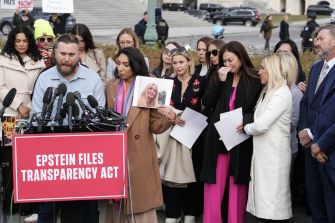
A journalist has filed a federal lawsuit in Washington, D.C., alleging the U.S. Department of Justice failed to follow a law requiring the release of records tied to Jeffrey Epstein and his network.
The case, filed April 27 in the U.S. District Court for the District of Columbia, comes from legal analyst and reporter Katie Phang, who argues that Acting Attorney General Todd Blanche did not comply with the Epstein Files Transparency Act, a 2025 law requiring the public release of investigative records related to Epstein, Ghislaine Maxwell, and others connected to the case.
Congress passed the measure in November following increased calls for public access to records related to Epstein and his network.
The law requires the Attorney General to release most records held by the Justice Department and FBI within 30 days, with only limited exceptions. Those exceptions include protecting victim privacy, withholding child sexual abuse material, and temporarily restricting disclosures that could interfere with active investigations. It also requires written explanations for redactions and a report to Congress describing what was released or withheld. The statute establishes disclosure as the default and limits the circumstances under which information can be withheld.
According to the lawsuit, the Justice Department did not meet those requirements. The complaint states that the agency missed the statutory deadline and released only a portion of the records required by law.
The case challenges the department's handling of the redactions. Officials are alleged to have blacked out large portions of documents without providing the written explanations required by law and removed information that did not fall within the statute’s narrow categories for withholding material.
The filing also describes conflicting treatment of records, with some materials exposing victims' identifying details, while other records were withheld or altered without clear legal justification. Several files were later removed after publication.
Documents involving President Donald Trump are also referenced in the complaint. The filing alleges that certain materials were not produced, were redacted, or were removed after initial release. Some of these records had been disclosed in other legal contexts but were not included in the public release required under the statute.
Phang argues that these actions have limited her ability to report on the Epstein investigation. The lawsuit states that missing documents, unexplained redactions, and withdrawn materials have made it difficult to assess the full scope of the government’s records and present accurate information to the public.
Under the Administrative Procedure Act, a federal law that allows courts to review actions taken by government agencies, courts can overturn agency decisions that violate federal law or are not properly explained as required by law. The lawsuit argues that the Justice Department’s handling of the records does not meet those standards. Federal law also limits agency authority and allows courts to intervene when officials fail to carry out duties required by statute.
The lawsuit seeks a court order requiring the Justice Department to produce all remaining materials covered by the law and to remove any unauthorized redactions. It also seeks detailed explanations for any remaining redactions and court oversight of the department’s compliance with the statute.