Judge Blocks Trump Administration’s “Loyalty Question” for Federal Job Applicants
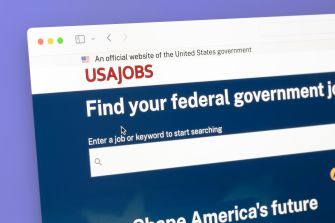
A federal judge has blocked the Trump administration from continuing to use an essay question that asked applicants for career federal jobs to explain how they would advance President Donald Trump’s policies and executive orders.
U.S. District Judge George A. O’Toole Jr. in Boston issued a preliminary injunction Friday, September 11, siding with three federal employee unions that argued the question improperly injected political views into a civil-service hiring system designed to operate on merit rather than party loyalty.
The unions said more than 70,000 federal job postings had included the question. It appeared in applications for positions ranging from air traffic control specialists to crane operators and nuclear materials couriers.
O’Toole concluded that the unions were likely to succeed on claims under the First Amendment and the Administrative Procedure Act. He wrote that applicants could reasonably understand the question as an attempt to determine their political beliefs even though federal law restricts the use of political affiliation in career civil-service employment.
The ruling raises a broader question about presidential control of the executive branch: How far can an administration go in seeking employees who will carry out its policies before a merit-based hiring standard becomes a political test?
Federal law gives presidents substantial authority to direct executive agencies and set policy priorities. Career civil servants, once hired, are expected to lawfully implement the policies of the administration in office.
The hiring rules for those employees operate differently from the rules governing political appointees.
Congress has created a civil-service system that generally protects applicants for career positions from discrimination based on political affiliation. Federal law also prohibits officials with personnel authority from coercing political activity or retaliating against applicants who refuse to participate in it.
O’Toole found that the administration’s essay question likely crossed that line.
The disputed requirement grew out of an executive order Trump signed on January 20, 2025, directing the Office of Personnel Management to develop a new federal hiring plan.
The order called for a workforce composed of “highly skilled Americans dedicated to the furtherance of American ideals, values, and interests.” It also directed agencies to recruit employees committed to improving government efficiency, defending the Constitution and faithfully serving the executive branch.
OPM followed with a May 2025 memorandum implementing the hiring plan.
Among the changes was an essay question asking applicants about the administration’s policies and executive orders and how they would help advance them if hired. Bloomberg Law reported that applicants were asked to address why administration policies were personally significant to them and how they would further those policies in federal service.
The American Federation of Government Employees, the American Federation of State, County and Municipal Employees and the National Association of Government Employees challenged the practice.
They argued that asking career applicants to explain their support for a president’s policies effectively required them to reveal political beliefs that federal hiring officials were prohibited from considering.
O’Toole agreed that the unions had shown a substantial likelihood of success.
“The plaintiffs are thus likely to succeed in showing that there is no legitimate governmental interest in inquiring into the political beliefs of applicants to federal civil service vacancies,” he wrote.
The First Amendment issue centers on the government’s unusual position when it acts as an employer.
The government generally has more latitude to manage its workforce than it has to regulate the speech of private citizens. Public agencies can require employees to perform their jobs, follow lawful directives, and carry out legitimate government policies.
Political belief presents a different concern in career hiring.
For decades, federal law has drawn a distinction between political appointments, where alignment with an administration’s agenda can be part of the position, and career civil-service jobs, where hiring is generally based on qualifications, ability, and merit.
Under 5 U.S.C. § 2302, covered federal officials cannot discriminate for or against an applicant on the basis of political affiliation when making personnel decisions. The statute also bars coercing political activity or taking action against an applicant for refusing to participate in such activity.
Those protections apply to large portions of the competitive civil service and other covered federal positions. The statute contains exceptions for jobs that are confidential, policy-determining, policymaking or policy-advocating in nature.
That distinction helps explain why the litigation focused on career positions.
Presidents routinely appoint Cabinet secretaries, agency leaders, White House officials and other political personnel who are chosen in part because they support the administration’s agenda. Congress has treated career civil servants differently to preserve continuity and professional expertise across changes in political leadership.
The government defended the question as a way to identify applicants prepared to carry out lawful administration priorities rather than as a test of partisan allegiance.
OPM had also maintained that the essay was optional and that agencies could not base hiring decisions on an applicant’s political beliefs.
The unions argued that the practical effect was different.
An applicant seeking a federal position could reasonably believe that expressing enthusiasm for presidential policies would improve the chances of being hired, while disagreement, criticism or declining to answer could work against the applicant.
O’Toole found that concern sufficient at the preliminary-injunction stage.
His ruling also relied on the Administrative Procedure Act, the federal law governing how agencies make and implement many government decisions.
Courts can set aside agency actions found to be arbitrary, capricious, contrary to law or adopted without required procedures. O’Toole concluded that the unions were likely to establish that OPM’s use of the question violated the APA because it infringed First Amendment rights.
The judge did not grant every form of relief the unions requested.
Bloomberg Law reported that O’Toole declined to issue a broader preliminary injunction preventing the government from considering answers or non-answers that had already been submitted in prior applications. His order instead stops continued use of the challenged question while the litigation proceeds.
The case therefore remains unresolved on the merits.
A preliminary injunction reflects a court’s assessment that the challengers are likely to prevail and face sufficient harm to justify temporary relief. It is not a final judgment declaring the policy permanently unlawful.
The administration can continue defending the policy in district court and can seek appellate review of the injunction.
The dispute comes amid a broader effort by the Trump administration to reshape the federal workforce.
Trump’s January 2025 hiring order described existing federal hiring practices as outdated and directed agencies to place greater emphasis on merit, practical skill, government efficiency and commitment to constitutional principles.
Other administration initiatives have involved workforce reductions, changes to employment protections and efforts to increase presidential control over parts of the federal bureaucracy. Those measures have produced multiple lawsuits over the respective powers of the president, Congress and federal agencies.
The “loyalty question” case presents a narrower version of that larger conflict.
There is little dispute that a president is entitled to expect executive-branch employees to carry out lawful policies once they are hired. A career employee cannot simply refuse to perform assigned duties because of disagreement with the administration.
The constitutional and statutory question is whether support for those policies can become part of deciding who receives the career job in the first place.
Congress designed the modern civil service in part to separate professional government employment from the older patronage system, in which federal jobs were often awarded based on political connections and party allegiance.
Federal merit-system laws continue that distinction today.
They allow an administration to select its political leadership while limiting the role political affiliation can play in filling ordinary career positions.
O’Toole’s ruling indicates that asking an applicant to demonstrate personal commitment to presidential policies can implicate those protections when the job itself is supposed to be politically neutral.
The administration’s position is that it was seeking workers prepared to implement the president’s lawful agenda.
The unions’ position is that the question asked something different: whether applicants personally supported that agenda.
For now, the court has stopped OPM from continuing to ask.
The case could ultimately help define how far a president can go in seeking ideological alignment among the career employees who carry out executive policy without changing the nonpartisan character Congress assigned to the federal civil service.