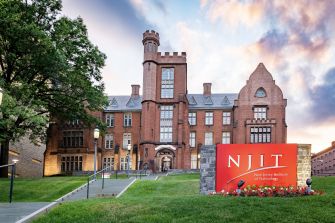
A federal judge in New Jersey has dismissed a lawsuit brought by a former New Jersey Institute of Technology lecturer who claimed the university retaliated against him for controversial off campus speech, ruling that school officials are shielded from liability under the doctrine of qualified immunity.
In an April 22, 2026 decision, U.S. District Judge William J. Martini granted summary judgment in favor of NJIT and several administrators, finding that the law was not clearly established when the university declined to renew Jason Jorjani’s contract in 2018.
Jorjani, a non-tenured lecturer at NJIT, was recorded in 2017 making remarks on race, immigration, and politics during an off campus conversation in Manhattan. Those comments later circulated publicly, including remarks praising Adolf Hitler. The university placed him on administrative leave, commissioned an outside investigation, and ultimately decided not to renew his contract.
Jorjani filed the lawsuit in 2018, alleging the university and its administrators retaliated against him for protected speech. A district court later dismissed the case, but the U.S. Court of Appeals for the Third Circuit revived the claims and sent the matter back for further review.
Courts use a balancing test known as the Pickering test to weigh an employee’s right to speak on public issues against the employer’s interest in maintaining workplace operations. The First Amendment applies differently to public employees, including university faculty, whose speech rights may be limited if their comments disrupt the workplace or affect the institution’s mission.
Qualified immunity protects government officials from being sued unless they violated a right that was clearly established under existing law. Courts examine whether earlier rulings gave officials clear notice that their actions were unlawful.
Judge Martini found no binding case within the Third Circuit that clearly protected a public university instructor’s off campus speech unrelated to job duties, particularly where there was some evidence of disruption within the academic community.
More recent rulings in other parts of the country have recognized broader protections for similar speech, but those decisions came after the events at issue. The court concluded that university officials could not have known their actions would violate the Constitution.
Claims against NJIT were also dismissed. The case argued that the university was responsible for the actions of its officials, but that theory depends on an underlying constitutional violation. Because the individual administrators are protected by qualified immunity, those claims could not proceed.
The court dismissed the case with prejudice.