A federal judge in Boston has ordered the Trump administration to restore the legal status of up to 900,000 migrants after the government revoked their legal status through mass emails, finding the move exceeded its authority and did not follow required procedures.
In a ruling issued March 31, U.S. District Judge Allison Burroughs said the Department of Homeland Security acted unlawfully when it ended humanitarian parole for migrants who had entered the country using the CBP One appointment system. The decision requires the department to reverse those terminations, which told recipients to leave the United States immediately.
The lawsuit was filed as a class action by migrants from Venezuela, Cuba, and Haiti, along with a Massachusetts-based advocacy group. The filing claims federal officials abruptly stripped individuals of their legal status and work authorization without proper review, affecting people who had entered the country through the CBP One process.
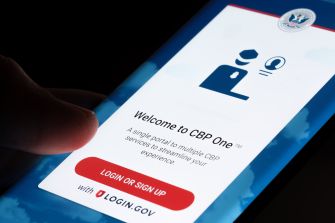
That program, developed during the Biden administration, allowed certain migrants to schedule appointments at the U.S.-Mexico border using the CBP One app. Those admitted were often granted humanitarian parole for up to two years, which allowed them to live and work in the United States on a temporary basis while their immigration cases were pending.
After returning to office in January 2025, President Donald Trump moved to shut down the program as part of a shift in federal immigration policy. Within hours, appointments scheduled through the app were canceled for migrants waiting at the border.
In the weeks that followed, in April 2025, the Department of Homeland Security sent notices to individuals who had entered through CBP One, stating that their parole had been terminated and directing them to leave the country. The app was later repurposed to allow migrants to report plans to leave the United States.
The administration has argued that the earlier policy granted parole too broadly, rather than on a case-by-case basis, as federal law requires. Officials said they were using their discretion to end parole.
Judge Burroughs found that officials did not follow the steps required to do so. The ruling states that the department did not show that a qualified official reviewed each case and determined that the purpose of each person’s parole had been fulfilled, a requirement under federal law and agency rules. The judge wrote that the agency’s actions were “not in accordance with law” and said federal rules do not give officials broad discretion to terminate parole without following required procedures.
Federal law sets the rules for how agencies must make decisions. Those rules require agencies to follow their own procedures and explain why they are taking action. Even in immigration, officials generally cannot act across large groups without reviewing individual cases when the law requires it.
Humanitarian parole allows people to enter the United States for specific reasons, such as urgent humanitarian need or public benefit. That structure limits how the government can later end that status. The ruling reinforces that those limits must be followed.
An advocacy group representing the migrants said many of those affected had followed the required process, including registering, appearing for inspection, and receiving parole under federal law.
The ruling requires the government to reverse the parole terminations issued in April 2025. The case remains pending before the court.