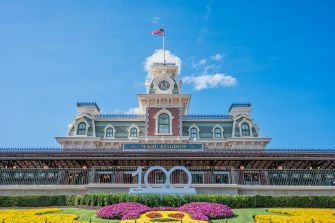
A Kentucky woman has sued Walt Disney Parks and Resorts, alleging she suffered permanent injuries after tripping on trolley tracks at Magic Kingdom in Orlando.
Rhonda Smith filed her complaint Dec. 22, 2025, in the Florida Circuit Court in Orange County. She claims her foot became caught in embedded steel rails and flangeways along Main Street U.S.A., a central corridor near the park entrance. The lawsuit alleges the tracks created gaps and changes in elevation in a pedestrian walkway, causing her to fall.
Walt Disney World Resort operates one of the largest theme park complexes in the United States, drawing millions of visitors each year. The Main Street trolley tracks are a longstanding design feature that runs through heavily traveled guest areas. Smith’s lawsuit challenges whether that design created an unreasonably dangerous condition.
The complaint alleges the company failed to maintain the premises in a reasonably safe condition and did not warn guests about hazardous gaps. It also asserts that Walt Disney Parks and Resorts had a non-delegable duty to keep the property safe, meaning the legal responsibility for safe conditions could not be shifted to contractors.
Smith claims she sustained a permanent injury to her body as a whole. She also alleges physical and mental pain, loss of enjoyment of life, aggravation of a preexisting condition, and financial losses, including lost wages and diminished earning capacity. The lawsuit seeks damages exceeding $50,000 and requests a jury trial.
In a Jan. 20 answer, Walt Disney Parks and Resorts denied liability. The company argues the trolley tracks are open and obvious and contends Smith failed to use reasonable care for her own safety. The filing alleges she did not pay adequate attention to her surroundings and either assumed the risk of injury or failed to take precautions. It further claims she was more than 50 percent responsible and asserts her injuries stem from other medical conditions rather than the fall.
The dispute falls under Florida premises liability law. Businesses that invite the public onto their property must maintain reasonably safe conditions and warn of hidden dangers they know about or should discover through inspection. That duty does not make a company automatically responsible for every accident. A jury must decide whether a condition posed an unreasonable risk and whether the owner failed to address it.
The theme park’s defense invokes the open and obvious doctrine, a rule often raised in slip and fall cases. Property owners argue they are not required to warn about conditions that are clearly visible and can be avoided through ordinary care. Courts may still consider whether the design or placement of a feature created an unreasonable hazard in a high-traffic area.
Disney’s claim that Smith was more than 50 percent responsible ties to Florida’s modified comparative negligence rule. Under a 2023 change in state law, a person who is found more than half at fault for her own injuries cannot recover damages. If she is 50 percent or less responsible, any award is reduced by that percentage. As a result, how a jury assigns fault could determine whether she recovers anything at all.
The answer also challenges causation. To prevail, an injured person must prove the incident caused the harm claimed. If a jury finds that unrelated medical conditions caused the injuries, the property owner would not be legally liable.
Both sides have demanded a jury trial.