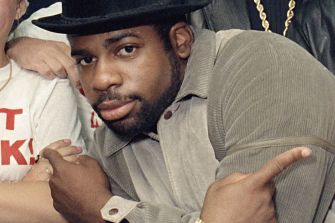
More than two decades after the fatal shooting of Jam Master Jay, a key figure in the investigation has admitted his role in the crime, marking a significant development in one of hip-hop’s most enduring unsolved cases.
Jay Bryant, 52, entered a guilty plea on a federal murder charge on April 27 in Brooklyn Federal Court. Bryant had previously pleaded not guilty after being indicted in May 2023. His trial had been scheduled to begin on May 4, though recent indications suggested he was considering a change in plea.
Under the terms of the plea, Bryant faces a potential prison sentence ranging from a minimum of 15 years to a maximum of 20 years. His admission of guilt comes after years of investigation into the 2002 killing of Jason William Mizell, the pioneering DJ and founding member of Run-DMC.
Mizell, widely known as Jam Master Jay, was shot and killed in October 2002 at a recording studio in Queens, New York. He was 37 years old at the time of his death. Authorities have long maintained that the killing was connected to a failed drug deal, though the full circumstances have remained the subject of legal disputes and conflicting testimony.
In court, Bryant acknowledged his involvement in facilitating the attack. “I knew a gun was going to be used to shoot Jason Mizell,” he told the judge. “I knew that what I was doing was wrong and a crime.” Prosecutors have said Bryant gained access to the building and opened a rear door, allowing others to enter undetected and ambush Mizell inside the studio.
Bryant is the third individual charged in connection with the case. In 2024, a jury convicted Ronald Washington and Karl Jordan Jr., the latter of whom is Mizell’s godson. However, legal proceedings have remained complicated. A judge later vacated Jordan’s conviction, citing insufficient proof of motive, while Washington has also sought to challenge his conviction through ongoing legal action.
Despite Bryant’s guilty plea, questions remain regarding the precise roles played by each individual involved. Prosecutors had previously argued that Washington blocked the studio exit while Jordan carried out the shooting, with Bryant acting as an accomplice who enabled access to the scene. However, competing claims have emerged over time, including testimony from Bryant’s uncle, who alleged that Bryant himself had confessed to being the shooter. Defense attorneys for Washington and Jordan have also suggested Bryant was responsible for the fatal gunfire.
Evidence tying Bryant to the scene included DNA recovered from a hat left behind at the studio, as well as witness testimony. During earlier trials, a witness named Tana Davis placed Bryant at the location, stating she saw a man matching his description entering the building before hearing gunshots.
Jam Master Jay’s legacy remains central to the case’s significance. As a founding member of Run-DMC alongside Joseph Simmons and Darryl McDaniels, Mizell played a defining role in shaping hip-hop’s early sound and cultural identity. The group’s influence extended beyond music, helping to bring rap into the mainstream with hits such as “It’s Tricky,” “Walk This Way,” and “My Adidas.”
Fellow artists have consistently emphasized Mizell’s importance within the genre. In 2024, Chuck D described him as the foundation of Run-DMC, crediting his precision and leadership as essential to the group’s success.
Federal prosecutors framed Bryant’s plea as the culmination of a prolonged investigative effort. U.S. Attorney Joseph Nocella said in a statement that the case demonstrated law enforcement’s persistence in pursuing justice, even after many years. “More than two decades after the cold-blooded, execution-style killing of Mr. Mizell, an exhaustive investigation revealed Bryant’s role, and today he finally admitted his guilt,” Nocella said.