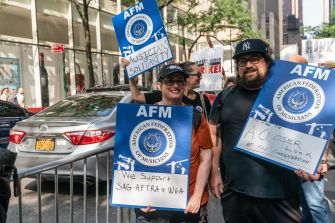
The American Federation of Musicians is escalating its fight with the nation's biggest record labels over artificial intelligence, demanding that Universal Music Group, Sony, Warner and Disney's Hollywood Records obtain musicians' consent and compensate them when their recordings are used to train AI systems.
The union, which represents more than 80,000 professional musicians, launched its "Human Made, Human Paid" campaign on Tuesday, October 20, 2026, ahead of another round of contract negotiations in November. The initiative seeks to strengthen protections for performers whose recordings are being licensed to technology companies developing AI-generated music.
Under its proposals, musicians would have the right to approve or refuse the use of their performances for AI training, receive clear credit for their contributions, and share in payments generated by AI licensing agreements. The demands will be part of negotiations over the Sound Recording Labor Agreement, which governs recording terms, royalty payments and healthcare benefits for union musicians.
The campaign follows a federal lawsuit the AFM filed against Universal and Warner-affiliated labels on June 5, 2026, accusing them of violating their existing labor contract through licensing arrangements with AI music companies Suno and Udio. The union alleges the labels permitted recordings featuring its members to be used for AI training and music generation without providing required notice or compensation.
At issue is the agreement's "new use" provision, which requires additional payments when recordings are repurposed for certain commercial uses. The AFM argues that licensing music for AI training falls within those protections. Universal and Warner dispute that interpretation, maintaining that their agreements with the technology companies do not trigger the compensation obligations alleged by the union.
The dispute highlights the distinction between copyright ownership and musicians' contractual rights. Record labels may control the copyrights to sound recordings while performers retain separate rights to compensation under collective bargaining agreements. The AFM contends those obligations continue to apply when labels license their catalogs for artificial intelligence.
"The record labels cannot pocket profits built on the backs of human artistry while cutting working musicians out of the equation," AFM International President Tino Gagliardi said in a statement. He described the campaign's central demands as consent, credit and compensation.
Will Wells, an AFM member and producer who has worked with Anthony Ramos, Cynthia Erivo and the Netflix series Emily in Paris, said the union's proposals are intended to preserve music as a sustainable profession as AI reshapes production. "We are pro-human creators and pro compensation for our labor," he said, emphasizing that musicians want technological development to provide opportunities for working artists.
Negotiations for a successor Sound Recording Labor Agreement began in January 2026, with additional sessions held in March. The November talks will bring the union's proposed AI safeguards back to the bargaining table while its lawsuit against Universal and Warner continues in federal court.