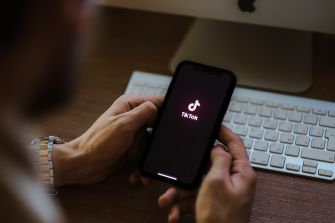
The fight against the popular video-sharing app TikTok is alive yet again after a dozen senators introduced bipartisan legislation that would give the administration power to ban the app along with other Chinese-owned apps and foreign technologies if they pose national security threats. Shortly after senators announced the legislation, the White House voiced its approval to ban the indisputably popular app and other related technologies.
The legislation is called the Restricting the Emergence of Security Threats that Risk Information and Communications Technology (RESTRICT) Act. And while the bill itself doesn't target TikTok specifically, the popular social media platform has become the face of the different technologies that pose a significant threat to national security. If passed, this bill would allow the Commerce Department to target any foreign-based technologies controlled by adversaries including Russia, North Korea, Cuba, Venezuela, and Iran.
In introducing the bill authored by Senate Intelligence Committee Chairman Mark Warner and No. 2 Senate Republican John Thune, Warner shared, "The Restrict Act is more than about TikTok and will give us that comprehensive approach" to do what’s best in the interest of national security.
TikTok is a Chinese-owned video-sharing platform that exploded in popularity during the pandemic. The platform has headquarters all over the globe, including a U.S. headquarters that serves the North American region. And while TikTok’s parent company ByteDance has shared in the past that the app is not controlled by the Chinese government, U.S. government officials have vocalized their concerns about China’s ability to gain insight into Americans and government officials.
Along with its popularity, the app is notorious for its seemingly unrestricted access to user data. After a user signs up with the app, the platform is privy to usernames, ages, phone numbers, email addresses, mobile device identifiers, approximate locations, and much more. Some cybersecurity experts have also scrutinized whether China could establish a back door through the app that would then be able to tap into other sensitive data of users.
This heightened level of security awareness is what has pushed legislators to restrict the use of the app, especially when it comes to the government devices of federal officials. Lawmakers have long since pushed the restriction of the app on the devices of military servicemen and women, lawmakers, and other individuals who could be seen as an access point for compromising national security.
If passed, the bill would allow the Commerce Department to introduce restrictions and even bans on the popular video-sharing app. As one of the fastest-growing apps in America and an estimated 100 million American users, government officials seemingly have good reason to be concerned. In addition to the unrestricted access to Americans the Chinese government could have, U.S. officials are concerned about national security threats in which China could be pressured to hand over that data to rival governments.
Sen. Warner shared with ABC News, "Our legislation says that any foreign communications technology that poses a national security risk -- and one of the key things about our bill as well says that it's incumbent upon the intelligence community to declassify as much information as possible to make that case -- that we give the commerce secretary the tools to mitigate to divest up to and including banning these sort of technologies."
TikTok CEO Shou Chew has defended the security of the app, arguing that the company has never received a request from the Chinese government to hand over data. Chew added that if such a request was made the company would never comply with it. The company has tried to mitigate U.S. government fears over the years as well. As part of these mitigation tactics, TikTok has agreed to move American data over to U.S. servers operated by tech giant Oracle. The company is also in negotiations with government officials to help further strengthen measures on American user data by implementing new restrictions and measures.
TikTok spokesperson Brooke Oberwetter shared that this new legislation would be a hindrance to American free speech and that a "U.S. ban on TikTok is a ban on the export of American culture and values to the billion-plus people who use our service worldwide."