The Corporate Transparency Act now requires shell companies to disclose ownership within a Federal database. Going forward, federal agencies will store proprietary information and share it with investors and banks.
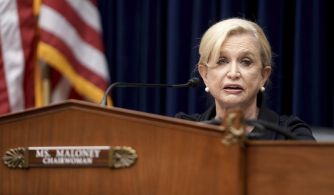
Democratic Representative Carolyn Maloney of New York first introduced the bill in 2010 as a means to combat money laundering. The law lingered in Congress for a decade as a flashpoint of contention for many.
The National Association of Criminal Defense Lawyers (NACDL) and the American Civil Liberties Union (ACLU) stated their opposition to the bill in a letter to Chairwoman Maxine Waters.
They argue that the act is redundant, vague, and overly punitive for what they describe as “first-time ‘paperwork’ violations.”
This is not the first time the ACLU has battled financial reform laws — recall their opposition to the 1970 and 2000 Bank Secrecy Acts on the grounds of privacy violation. Ultimately, the Supreme Court decided in favor of Congress and the practice remains in place today.
Those in favor of the bill and its iterations argue that large companies don’t need anonymity to do legitimate business. Anonymous shell companies are routinely used to evade taxes and launder monies earned through trafficking.
On January 1st of this year, Congress passed it into law with little public attention after attaching it to the almost 2,000-page defense budget. President Trump vetoed the budget, but Congress defeated his veto.
The bill describes the practice of founding anonymously shell companies as a means to “commit crimes affecting interstate and international commerce such as terrorism, proliferation financing, drug and human trafficking, money laundering, tax evasion, counterfeiting, piracy, securities fraud, financial fraud, and acts of foreign corruption.”
Roughly two million companies are founded in the United States every year. Before Congress passed The Corporate Transparency Act, attorneys representing multinational companies could found an LLC with less information than they’d need to get a “bank account or driver’s license.” They could establish companies without describing the beneficiaries — without naming the owners of the company they’re founding.
We are very much the outlier here. This Orwellian practice doesn’t just defy common sense, it also defies international standards. All 27 members of the European Union and England require the founder to disclose beneficiary information at the time of incorporation.
In 2006, the International Financial Action Task Force (a body of which the US is a member) criticized the US itself for failing to meet this obvious standard.
Those companies that continue to violate this law can face criminal charges and a penalty of up to $10,000, a penalty that The Secretary of Treasury can waive; those who reveal the violation, though, can receive considerable awards.
Whistleblowers who help uncover illegal practices through shell companies can receive up to 30% of recovered funds. Monies recovered in this context now includes tangibles like artwork and antiques as well
Legal uses for shell companies will persist. Shell companies are an integral part of many US companies — they’re great for avoiding taxation or entering foreign markets dominated by despots and economic adversaries.
The IMF estimates that the legal use of shell companies costs developing countries roughly $213B every year.