New Mexico sued the U.S. Department of Justice on Wednesday, asking a federal judge to intervene after the agency refused to provide unredacted records sought for the state’s renewed criminal investigation into alleged sexual abuse at Jeffrey Epstein’s former Zorro Ranch.
The lawsuit, filed in the U.S. District Court for the District of Columbia, accuses the Justice Department and Acting Attorney General Todd Blanche of blocking investigators from identifying possible victims, witnesses and people who may have taken part in crimes at the ranch near Santa Fe.
The Justice Department said it has provided some material but cannot disclose information that identifies victims because of federal law and court orders. The agency argues that New Mexico has not established a legal basis for the broad release it is seeking and said it remains available to assist the state within the limits of federal law and binding court orders.
New Mexico Attorney General Raúl Torrez reopened the state investigation in February. His office says the federal records may help investigators determine what occurred at the ranch and whether the evidence supports charges under state law. No charges have been announced.
The dispute reaches back to 2019, when New Mexico says federal authorities asked the state to stop its Epstein investigation and turn over its evidence, including police reports and recorded witness interviews. According to the complaint, federal prosecutors agreed to continue sharing information about possible survivors and crimes connected to New Mexico, but the state claims that cooperation did not occur.
After reopening the investigation, the state first sought the records through informal requests and later submitted a formal demand under Justice Department regulations governing access to agency files. New Mexico offered to accept confidentiality limits, security controls or an in-person review rather than making the records public, the lawsuit states.
Federal agencies use regulations commonly known as Touhy rules to control how employees and government records are produced in response to subpoenas, court orders and other official demands. The rules establish who may approve a disclosure and what the agency must consider, including whether releasing information would violate another law, expose protected material or interfere with government work.
Justice Department regulations permit appropriate information sharing with federal, state, local and foreign law enforcement agencies. Officials reviewing a request may also consider whether disclosure would assist the administration of justice, including the investigation or prosecution of a civil or criminal case.
The lawsuit brings two claims under the Administrative Procedure Act, the federal law that allows courts to review certain actions taken by government agencies. A judge may set aside an agency decision that lacks a reasoned basis, exceeds the agency’s legal authority, or was reached without following required procedures. A court may also order an agency to take a legally required action that has been unlawfully withheld or unreasonably delayed.
New Mexico argues that the Justice Department relied on broad privacy and burden objections without addressing the state’s role as a law enforcement agency, its offer to safeguard the information, or its requests for several specifically identified records. The state claims the department either issued a final decision that should be overturned or failed to complete the review required by its own rules.
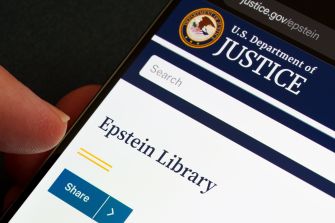
The Epstein Files Transparency Act generally requires the Justice Department to make unclassified Epstein-related records available to the public. The law permits redactions for information that could identify victims, child sexual abuse material, active investigations, and other protected content.
Public release and confidential access by law enforcement agencies involve separate legal questions. Privacy laws and protective orders may still control whether records can be shared with investigators and what safeguards must be used. New Mexico argues that those protections could be addressed through confidentiality requirements, restricted access or a narrower production rather than a complete refusal.
The lawsuit asks the court to overturn the Justice Department’s decision and require the agency to evaluate the request under federal law and its own regulations.
New Mexico’s criminal investigation remains open, and the civil case is pending in federal court in Washington.