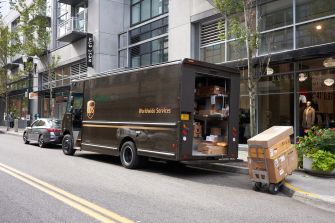
New York Attorney General Letitia James has filed a civil lawsuit against United Parcel Service, Inc., known as UPS, accusing the company of alleged wage violations affecting thousands of seasonal delivery workers across the state. The lawsuit alleges violations of state and federal wage laws, including failure to pay minimum wage, overtime, and promised wages, as well as failures to provide accurate wage statements and payroll records, according to court filings.
The complaint states that the practices affected temporary workers hired during peak delivery season, which typically runs from October through January. These workers include driver helpers, who assist UPS drivers on delivery routes, and seasonal support drivers, who use their personal vehicles to deliver packages. The filing alleges that UPS employed these workers at more than 50 facilities statewide and that many worked schedules that changed day to day and at times exceeded 40 hours per week.
According to the lawsuit, UPS did not pay workers for time spent performing required tasks before and after their recorded shifts. Workers were allegedly required to wait for assignments, load packages, attend mandatory training, travel between locations, or return equipment without being clocked in. In some cases, workers were instructed to clock out before finishing job duties, including returning packages or delivery devices, which the lawsuit says resulted in unpaid work time.
The filing further states that UPS used several different timekeeping systems, including paper timesheets, handheld devices, and mobile applications. Payroll calculations allegedly relied on scheduled start times or first package scans rather than when workers actually began doing their jobs. The lawsuit also claims that meal breaks were deducted even when workers did not take them and that time records were changed in ways that reduced paid work time.
Taken together, the state claims these practices reduced recorded work time, even when employees were performing required job duties.
UPS is one of the world’s largest package delivery companies, operating in more than 200 countries and territories and employing hundreds of thousands of workers worldwide. During peak demand periods, large delivery companies rely heavily on seasonal workers, often using flexible schedules and temporary staffing to handle increased delivery volume.
Under the wage and hour law, employers are generally required to pay workers for all time they are required to be on duty or performing job-related tasks. This can include waiting time, required travel, mandatory training, and work done before clocking in or after clocking out. The filing argues that time spent preparing for deliveries or completing required tasks still counts as paid work, even when no package is actively being delivered.
Seasonal and temporary workers are often more affected by these issues because their schedules and start times may change frequently. Informal scheduling and inconsistent timekeeping can increase the risk that required work is not fully recorded. The lawsuit alleges that these conditions made seasonal delivery workers especially vulnerable to unpaid labor during busy delivery periods.
The case relies in part on New York Executive Law Section 63(12), which allows the state to seek relief when a business repeatedly engages in illegal conduct. The statute is often used in cases involving alleged violations of wage laws, including state and federal rules on minimum wage, overtime, and payroll records. Under this law, the state does not need to prove intent to defraud but must show a pattern of unlawful practices.
The lawsuit seeks court orders requiring UPS to stop the alleged practices, repay workers for unpaid wages, and follow state and federal labor laws. Courts may also impose penalties and other remedies if the claims are upheld.