NFL Ordered to Pay Billions to 'Sunday Ticket' Subscribers Over Antitrust Violations

by Nina Richards | Jun 27, 2024
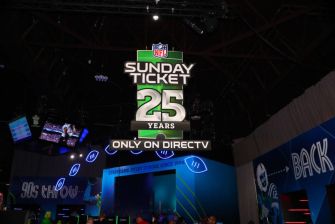
Logo celebrating 25 years of NFL Sunday Ticket, exclusively on DirecTV.
Photo Source: Rich Graessle/Icon Sportswire via Getty Images, CBS

On Thursday, the NFL suffered a significant loss in a long-standing class-action lawsuit filed by "Sunday Ticket" subscribers, who challenged the NFL over alleged antitrust violations and the costs associated with the DirecTV "Sunday Ticket" broadcast package. The verdict, delivered in the U.S. District Court for the Central District of California, mandates the NFL to pay $96 million to commercial subscribers and $4.7 billion to residential subscribers.

As reported by USA Today, the class-action lawsuit was initiated by NFL fans in 2015, who accused the league of violating antitrust laws by limiting the distribution of "Sunday Ticket" exclusively to satellite provider DirecTV and thereby enabling inflated pricing. Originally, the case was dismissed but later revived by the 9th Circuit Court of Appeals in 2019. The plaintiffs argued that the NFL's approach restricted competition and forced consumers to pay high prices to watch out-of-market games. This setup contrasts with other professional sports leagues, where viewers have more flexible options to watch their preferred teams.

The plaintiffs sought damages amounting to $7.01 billion, highlighting the extensive impact on consumers over the years. However, damages can be tripled under antitrust law violations, potentially raising the NFL's liability to nearly $15 billion.

The NFL's defense emphasized the popularity and breadth of their media distribution strategy, which includes free over-the-air broadcasts, RedZone, Sunday Ticket, and NFL+. The league maintained that this approach is the most fan-friendly in sports and entertainment, offering extensive access at minimal cost. The NFL argued that the pooling of broadcast rights with CBS and Fox allowed local games to be aired for free, benefiting fans.

However, the plaintiffs presented evidence suggesting a price-fixing scheme between the NFL and DirecTV. Email correspondence indicated that the NFL had advance knowledge of DirecTV's pricing for Sunday Ticket, with league executives allegedly participating in decisions about pricing. This coordination, according to the plaintiffs, constituted illegal price-fixing.

The trial began on June 6 in Los Angeles, with jury deliberations commencing on Wednesday. Notable testimonies included those of NFL commissioner Roger Goodell and Dallas Cowboys owner Jerry Jones. Despite the jury's decision, the NFL has expressed its intention to appeal, asserting the class action claims are baseless and without merit.

Meanwhile, DirecTV's exclusive contract with the NFL ended after the 2022 season, with Google, the parent company of YouTube TV, securing a seven-year deal for Sunday Ticket starting with the 2023 season. Notably, neither Google nor YouTube TV were defendants in this trial.

Share This Article

If you found this article insightful, consider sharing it with your network.

Nina Richards
Nina earned her Bachelor's Degree in Psychology from Brandman University, laying the foundation for her interest in and understanding of human behavior. She works full-time at Law Commentary and is dedicated to merging her passion for pop culture with legal insights. Combining her analytical skills and interest in staying updated on trends, she strives to deliver pop culture legal news, bridging the gap between law and contemporary society.

Related Articles

Baseball player in a pinstriped uniform swings a bat under stadium lights.

MLB Loses Most of Cable Royalty Fight, but Court Still Throws Out Copyright Board’s Split

Major League Baseball lost nearly all of its challenge to how federal copyright officials valued sports programming, but a federal appeals court still threw out the final split of millions of dollars in cable television royalties after finding that the Board never adequately explained how it arrived at the numbers.The... Read More about MLB Loses Most of Cable Royalty Fight, but Court Still Throws Out Copyright Board’s Split

A tilted smartphone screen displays the TikTok logo and “TikTok Shop” branding, with a blurred livestream interface visible in the dark background.

TikTok, Fanatics and NFL Accused of Antitrust Violations Over Memorabilia Sellers

A sports memorabilia seller has filed a federal antitrust lawsuit accusing TikTok, Fanatics and NFL entities of combining their control over online marketplace access and licensed football products to restrict independent sellers and steer more business toward Fanatics.David Allan Skalsky and QCBRIPNSHIP LLC, which operated the memorabilia business Quad City... Read More about TikTok, Fanatics and NFL Accused of Antitrust Violations Over Memorabilia Sellers

NCAA logo on a basketball court during a March Madness event.

NCAA and Power Conferences Reach $2.8B Settlement Agreement Paving the Way for Athlete Compensation

The National Collegiate Athletics Association (NCAA) and its five power conferences have reached a settlement agreement, marking a significant shift in the landscape of college sports. The agreement, announced on Thursday (May 24), signifies a momentous departure from the traditional model of amateurism in collegiate athletics, allowing schools to directly... Read More about NCAA and Power Conferences Reach $2.8B Settlement Agreement Paving the Way for Athlete Compensation

MetLife Stadium, home to the New York Giants and New York Jets, located in East Rutherford, New Jersey.

Fans sue ‘New York’ Giants & Jets for $6 Billion, saying teams should play in NY, not in NJ as advertised

The New York Giants and the New York Jets are known for their ride-or-die fans. But at least two major fans are suing the teams, since both play their home games in New Jersey, and not in New York. The fans are seeking $6 billion, including $2 billion in monetary... Read More about Fans sue ‘New York’ Giants & Jets for $6 Billion, saying teams should play in NY, not in NJ as advertised

Legal term

Search articles and Legalpedia

Subscribe to Newsletter