Novo Nordisk has filed a federal lawsuit accusing telehealth company Hims & Hers Health of infringing its semaglutide patent by marketing and selling compounded weight loss drugs. The case, filed in the U.S. District Court for the District of Delaware, challenges whether Hims’ compounded semaglutide products unlawfully use technology protected by Novo Nordisk’s FDA-approved medicines, according to court filings.
The lawsuit was brought by Novo Nordisk A/S and Novo Nordisk Inc. against Hims & Hers Health, Inc. and its subsidiary Hims, Inc., both Delaware corporations. Novo Nordisk claims the telehealth company has offered compounded semaglutide products nationwide through its online platform and affiliated pharmacies without authorization, despite Novo Nordisk holding exclusive rights to the compound used in its diabetes and weight loss drugs Ozempic, Wegovy, and Rybelsus.
Hims & Hers is a publicly traded telehealth company that provides online medical consultations and prescription treatments for a range of conditions, including hair loss, mental health, sexual wellness, and weight management. In recent years, the company expanded into weight loss services by offering compounded glucagon-like peptide-1 treatments amid rising demand for drugs such as Ozempic and Wegovy. According to the complaint, the company markets these medications directly to consumers through its websites and coordinates fulfillment through partner pharmacies.
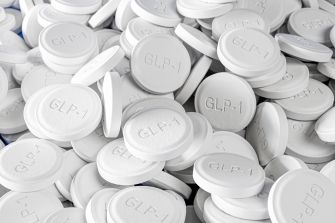
The compound at the center of the dispute is semaglutide, a GLP-1 receptor agonist that helps regulate blood sugar and appetite. Novo Nordisk states that it spent decades conducting research and investing billions of dollars to develop semaglutide and bring its products to market through the Food and Drug Administration’s approval process. That process requires extensive testing and regulatory review to ensure that medicines meet federal standards for safety, effectiveness, and manufacturing quality.
Novo Nordisk argues that Hims attempted to bypass that regulatory framework by offering compounded versions of semaglutide that have not been reviewed or approved by the FDA. The complaint points to statements on Hims’ website acknowledging that its compounded products are not evaluated for safety, effectiveness, or quality by the agency. Novo Nordisk claims this approach exceeds the limited scope of drug compounding under federal law and infringes its intellectual property rights.
Novo Nordisk’s lawsuit rests on its claim that it holds exclusive patent rights covering semaglutide. Under federal patent law, the owner of a patented invention has the sole right to make, use, and sell that technology or to authorize others to do so. Novo Nordisk argues that by offering compounded products containing semaglutide without permission, Hims unlawfully used technology protected by those rights.
The case also turns on a legal distinction that often shapes disputes involving compounded drugs. Federal law permits pharmacies to compound medications in limited circumstances, such as when a patient requires a customized formulation. Novo Nordisk argues that those permissions do not override existing patent rights and do not allow companies to replicate a patented drug simply because demand is high or access is constrained.
Novo Nordisk also alleges induced infringement, a legal theory that applies when a company encourages or facilitates others to violate a patent. According to the complaint, Hims worked with pharmacies, medical providers, and patients to make and use the patented compound. Novo Nordisk points to the company’s role in directing how the medication is dispensed and used, including providing instructional materials, as evidence that Hims actively promoted the alleged infringement.
The lawsuit further alleges that the infringement was willful. According to court filings, Novo Nordisk notified Hims of the patent and its alleged infringement and sent a letter on February 8, 2026, demanding that the company stop its unauthorized use of the technology. Novo Nordisk claims that Hims continued offering the accused products after receiving that notice. If established, a finding of willful infringement can allow a court to award enhanced damages under federal patent law.
The court has not yet ruled on the claims.