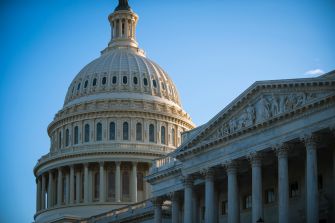
The House voted Tuesday to make daylight saving time permanent across most of the United States, advancing a measure that would end the twice-yearly clock change and keep the later hour in place year-round.
The Sunshine Protection Act passed 308 to 117, with support from members of both parties, and now heads to the Senate. If senators approve the House version, the bill can go to President Donald Trump for his signature. Any changes would send it back to the House for another vote.
H.R. 139 would repeal the section of the Uniform Time Act of 1966 that sets the annual daylight saving period. Federal law currently requires clocks to move forward in March and return to standard time in November in states that follow daylight saving time.
The proposal would also move each federal time zone forward by one hour and make that hour the new legal standard. That approach goes beyond simply extending daylight saving time through the winter. Congress would be changing how standard time is defined under federal law, leaving most of the country on the hour now observed between March and November.
Federal law plays a central role because states cannot adopt permanent daylight saving time on their own. The Uniform Time Act allows a state to remain on standard time throughout the year, but it does not permit a state to keep daylight saving time after the federal period ends.
Congress included that limit to maintain consistent time rules within the nation’s time zones. Without a national standard, neighboring states or communities could adopt different schedules, creating conflicts for transportation, business, communications and travel.
The Constitution allows federal law to take priority when Congress has authority to regulate an issue and has displaced conflicting state rules. That principle, known as federal preemption, prevents a state law from taking effect when it clashes with the national system established by Congress.
Nineteen states have approved laws or measures supporting year-round daylight saving time if Congress allows it, according to the National Conference of State Legislatures. Some depend on neighboring states making the same change. None can take effect while the current federal restriction remains in place.
The Sunshine Protection Act would preserve a choice for states and areas that had already exempted themselves from daylight saving time before the federal measure became law. Those jurisdictions could keep the standard time they currently observe or move to the newly advanced national standard.
Hawaii, most of Arizona, and several United States territories currently remain on standard time throughout the year. The bill does not appear to give every state an open-ended right to opt out after enactment, making the timing and wording of existing state exemptions important.
Supporters argue that a fixed clock would end the sleep disruption and inconvenience linked to the spring and fall changes. They also claim that more evening light could support recreation, retail activity and public safety.
Opponents focus largely on winter mornings. Later sunrises could leave children traveling to school in darkness and require many workers to begin their day before sunrise. Lawmakers from agricultural areas have also warned that the change could affect farms that rely on early morning schedules.
The disagreement is not limited to whether clocks should continue changing. Many opponents of H.R. 139 also want to end the seasonal switch, but argue that the country should remain on standard time instead. Permanent standard time would preserve more morning light in winter, while permanent daylight saving time would shift that hour of light to the evening.
Congress has tried permanent daylight saving time before. A law adopted during the 1970s energy crisis created a year-round system beginning in January 1974, but lawmakers reverted after public opposition, much of it centered on dark winter mornings.
A similar Sunshine Protection Act passed the Senate in 2022 but did not receive a final vote in the House. The current measure faces the opposite path after clearing the House first.
H.R. 139 is awaiting action in the Senate. Until the measure becomes law, states that observe daylight saving time will continue changing their clocks under the schedule set by the Uniform Time Act.