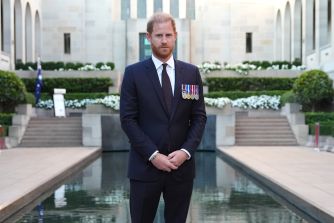
Prince Harry and six other public figures have lost their High Court privacy battle against Associated Newspapers, the publisher of the Daily Mail and Mail on Sunday, after a judge ruled they had not produced sufficient evidence to back up their claims of unlawful newsgathering.
Justice Nicklin, who presided over the case, found that while the allegations brought by the Duke of Sussex and his fellow claimants were serious, seriousness alone was not enough to secure a finding in their favor. He said the group could not rest their case on suspicion alone, however reasonable that suspicion might have seemed, and instead needed to demonstrate that information had actually been gathered through unlawful means.
Rather than ruling on whether such practices had been widespread across the organization, the judge chose to assess the merit of each claim on its own terms, ultimately siding with journalists who offered legitimate accounts of how they obtained their stories.
The judge also rejected arguments that three senior figures at Associated Newspapers, former editors Paul Dacre and Peter Wright along with the company's senior legal counsel Elizabeth Hartley, had misled the Leveson Inquiry when they previously testified that no unlawful activity had taken place at the two publications.
Across a lengthy judgment running into the hundreds of pages, Nicklin worked through each disputed article individually, frequently acknowledging that suspicions about sourcing existed without finding those suspicions amounted to proof.
One example involved a 2013 story by the paper's royal editor describing Prince Harry facing a solitary New Year's Eve apart from his then-girlfriend Cressida Bonas, with claimants alleging a freelance reporter had improperly obtained her travel details. Harry testified that he found the situation unsettling and could not explain how the publication had learned where the couple was each spending the holiday. The judge acknowledged the prince's genuine unease but concluded that discomfort and suspicion could not substitute for evidence.
The trial, held earlier this year, drew testimony from dozens of witnesses, including the claimants themselves and numerous current and former staff and executives from Associated Newspapers who disputed any wrongdoing. Harry grew visibly emotional at points during his testimony, describing how the coverage had affected his family and asserting that the publisher had made life deeply difficult for his wife, Meghan, the Duchess of Sussex.
Joining Harry in the action were actors Elizabeth Hurley and Sadie Frost, musician Elton John and his husband David Furnish, former Liberal Democrat politician Sir Simon Hughes, and Baroness Doreen Lawrence, mother of murdered teenager Stephen Lawrence. Hurley became tearful discussing coverage of a paternity dispute involving her son and businessman Steve Bing. Harry appeared in person to argue that fourteen articles about his private life relied on improperly sourced material, while Frost's claim spanned eleven articles, including a draft story touching on her ectopic pregnancy.
Baroness Lawrence pointed to five articles she said drew on information taken without authorization related to her and the investigation into her son's killing. Lawyers for Elton John and Furnish argued the paper published sensitive details about their surrogate son's birth, while Hughes's legal team contended the publication had been willing to make an issue of his sexuality, including an incident years earlier in which he was publicly identified as gay by a rival tabloid.
Associated Newspapers rejected every allegation throughout the proceedings. Following the ruling, the company said the judge had dismissed all 97 claims brought against it and had found its journalists' explanations of their sourcing to be credible, calling the outcome a significant vindication of its reporting.
The publisher also said the litigation had consumed enormous court resources and more than £50 million in legal fees. Dacre described the case as baseless and said he struggled to understand why Baroness Lawrence had turned against a paper that had campaigned on behalf of her family, including its well-known 1997 front page naming suspects in her son's murder. Lawrence had testified earlier in the proceedings that she believed the paper's support had been more about appearances than genuine solidarity. Hughes called the ruling disappointing and said he needed time to review the judge's reasoning.
The case marks what is expected to be the final chapter in Harry's long-running legal campaign against British tabloid practices. He previously won a series of claims against Mirror Group Newspapers in 2023, and last year the publisher of the Sun agreed to pay substantial damages and issued an apology to settle a separate dispute. The ruling comes as Harry begins a week of public engagements in London tied to the Invictus Games, the charity he founded for wounded veterans.
A further two-day hearing is scheduled for late July.