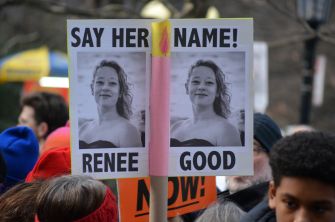
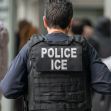
The family of Renee Good has filed two federal lawsuits over her fatal shooting by an Immigration and Customs Enforcement agent in Minneapolis, including a civil rights case against ICE agent Jonathan Ross and senior Trump administration officials that invokes provisions of the Reconstruction-era Ku Klux Klan Act.
The lawsuits, filed October 1, 2026, in the U.S. District Court for the District of Minnesota, take separate legal paths. One names the United States as the sole defendant and seeks damages under the Federal Tort Claims Act for Good’s death. The other names Ross and several current and former Trump administration officials, accusing them of participating in or failing to stop a civil rights conspiracy tied to Operation Metro Surge.
Good, a 37-year-old mother of three, was shot by Ross on January 7, 2026, after she and her partner, Becca Good, encountered immigration agents in their south Minneapolis neighborhood. Good was inside her vehicle when another agent ordered her out. She then began moving the vehicle before Ross opened fire.
The civil rights lawsuit invokes 42 U.S.C. §§ 1985 and 1986, Reconstruction-era provisions Congress enacted in 1871 to reach conspiracies that interfere with equal protection and other constitutional rights.
The family is invoking a statute enacted to combat Ku Klux Klan-era civil rights conspiracies, not accusing the defendants of Klan membership. It argues that federal officials participated in or failed to stop a modern conspiracy to interfere with constitutional rights.
The complaint also points to Section 1985’s Reconstruction-era language covering people who go “in disguise on the highway” to deprive others of equal protection, wording Congress adopted in response to Klan violence after the Civil War.
Along with Ross, the case names White House Deputy Chief of Staff Stephen Miller, former Homeland Security Secretary Kristi Noem, former Border Patrol commander Gregory Bovino, Corey Lewandowski, Tom Homan, former ICE Acting Director Todd Lyons and unidentified federal agents.
The family alleges Good’s shooting grew out of a broader pattern of aggressive enforcement during Operation Metro Surge, including actions directed at people perceived to be Somali or Hispanic and residents who documented or protested immigration operations. The plaintiffs contend that Good’s death was connected to that broader effort rather than an isolated encounter between one officer and one civilian.
Ross is also accused of using excessive force in violation of the Fourth Amendment under the Supreme Court’s 1971 decision in Bivens v. Six Unknown Named Agents, alongside wrongful death and other claims under Minnesota law.
According to the family, Good and Becca Good had dropped their son off at school before encountering federal agents on Portland Avenue. The lawsuit says Renee Good stopped her vehicle and honked to alert neighbors while Becca Good got out and began recording the officers.
The complaint describes Good as an unarmed civilian who was not the subject of an investigation and says she posed no threat to the agents. As Ross walked near her vehicle while recording on his phone, Good told him, “I’m not mad at you.” Another agent then approached and ordered her out of the vehicle.
Video cited in accounts of the shooting shows Good briefly reverse and then move forward while turning the steering wheel to the right. Ross, positioned near the front-left side of the vehicle, fired into it. Federal officials have defended the shooting as a justified use of force, while the family contends Ross was no longer in the vehicle’s path when he fired.
The second case seeks damages directly from the United States, alleging that Ross and other federal employees committed wrongful acts for which the government can be held liable under the Federal Tort Claims Act. The complaint brings wrongful death claims under Minnesota law based on allegations including battery, assault, false imprisonment, intentional infliction of emotional distress and negligence.
Becca Good separately alleges intentional and negligent infliction of emotional distress, saying she was standing nearby when Ross fired into the vehicle and witnessed her partner’s death. The FTCA case will be tried before a judge, while the civil rights lawsuit against the individual defendants demands a jury trial.
The shooting drew national scrutiny as the Trump administration expanded immigration enforcement in Minnesota, with senior officials quickly describing Good’s actions as domestic terrorism. Her family and attorneys dispute that characterization and maintain she was attempting to leave the scene.
Ross has not been criminally charged in the shooting. Hennepin County Attorney Mary Moriarty has continued investigating the deaths of Good and Alex Pretti, another U.S. citizen fatally shot by federal immigration officers in Minneapolis later in January. Local investigators have said they faced difficulties obtaining federal evidence after the Justice Department ended its usual cooperation with local authorities.
The White House has rejected the allegations. A spokesperson said the administration would “vigorously defend” itself against the lawsuits and called the cases baseless.
Good’s brother, Brent Ganger, is serving as trustee for her next of kin, while Becca Good is a plaintiff in both cases. The wrongful death case seeks to hold the federal government financially responsible for Good’s death, while the civil rights lawsuit asks a jury to decide whether Ross and other officials can be held individually liable for the alleged conspiracy surrounding Operation Metro Surge.