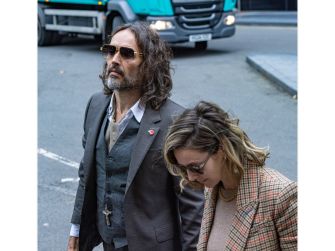
Four women raped or sexually assaulted by Russell Brand described years of anxiety, damaged relationships and lost confidence in statements delivered to a London court Monday, November 9, 2026, recounting how the comedian's crimes continued to affect their lives long after the attacks.
Three victim impact statements were read by prosecutors at Southwark Crown Court, while a fourth woman addressed the judge from behind a protective screen. Their accounts detailed the personal and professional consequences of assaults committed between 2004 and 2009, including the difficulty of repeatedly encountering Brand in the media as his career grew.
The woman Brand was convicted of raping in 2009 described how the attack disrupted nearly every aspect of her life. She moved back in with her parents, took time away from work and struggled with anxiety, sleep problems and difficulties maintaining relationships. She told the court that the experience had left her questioning her judgment and ability to trust others.
Her statement, read by prosecutor Riel Karmy-Jones KC, also explained why she initially remained silent. Brand's fame, wealth and public influence made her fear that her account would be dismissed or that she would face consequences for speaking out.
Another woman, whom Brand sexually assaulted at a Soho bar in 2004, described spending more than two decades questioning whether she could have prevented what happened. Speaking in person, she said the experience damaged her self-respect and affected subsequent relationships.
As Brand became increasingly prominent on television and in entertainment, she struggled with seeing him celebrated publicly. Coverage of the criminal proceedings later brought renewed distress, while hostile online messages and threats left her fearful that her identity could become public and place her family at risk.
A third woman described the consequences of an assault while she was working on a Channel 4 production. She reported the incident to senior management, but her complaint was mishandled. Channel 4 has since acknowledged failures in its response. The woman told the court that the experience affected her confidence at work and her relationships with colleagues.
Another woman, assaulted while working at a radio station, described the continuing distress of hearing Brand's voice or encountering him in the media. Her statement also addressed the anxiety associated with participating in the investigation and the impact on her professional relationships.
Brand was convicted on November 5 of one count of rape and three counts of sexual assault. The jury acquitted him of two additional rape charges and one count of attempted indecent assault. He had denied all the allegations.
During the sentencing hearing, which resulted in a prison term of 10 years and six months, Judge Joel Bennathan acknowledged that Brand's public profile had compounded the women's suffering because they continued to see and hear him long after the offenses. The judge considered that harm while declining to treat celebrity status alone as grounds for increasing the sentence.
Bennathan also considered Brand's charitable work, the passage of time since the offenses, and other mitigating circumstances. He imposed nine years for rape and a further 18 months for the sexual assault convictions.
Before sentencing, the judge praised the women for their determination in giving evidence despite having their credibility challenged during the trial. He acknowledged the difficulty of publicly recounting their experiences and criticized Brand's treatment of them.
Bennathan stressed that women retain the right to refuse sexual contact regardless of what they wear, where they go or whether they have been drinking. He said the women were entitled to seek justice for the crimes committed against them.