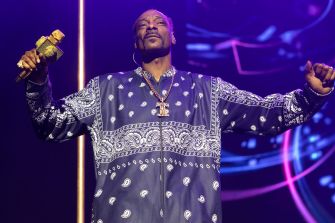
A new copyright lawsuit is targeting some of hip-hop's biggest names, including Snoop Dogg, Diddy, and the estate of The Notorious B.I.G., over claims that two early-2000s tracks lifted instrumentals from a decades-old funk record without permission or credit.
The complaint, filed on Tuesday, comes from two composers who co-wrote "Skatin'," a 1980 song originally recorded by Brazilian artist Deodato. According to the suit, the instrumental foundation of that track was sampled without authorization on two separate songs released roughly a quarter-century later, both of which found commercial success on Billboard's charts.
The first alleged instance involves "I Wanna Thank Ya," a 2004 collaboration between R&B singer Angie Stone and Snoop Dogg that climbed all the way to No. 1 on the Dance Club Songs chart, making it one of the more notable dance hits of that era. The second is "Nasty Girl," released in 2005 as part of Duets: The Final Chapter, the posthumous album from The Notorious B.I.G. that arrived years after the rapper's 1997 death. That track featured additional verses from Diddy and Nelly and reached No. 44 on the Hot 100, giving it solid mainstream visibility at the time of its release.
Because both songs credit multiple performers and producers, the lawsuit's defendants span a wide swath of the industry, pulling in some of the era's most recognizable names alongside the labels and estates tied to each release. Suits like this one are far from unusual in the music business, where older recordings, particularly from the funk and soul era, are frequently sampled by hip-hop and R&B producers looking to build new tracks around a familiar groove or break. When those samples go uncleared, meaning no formal licensing agreement was reached with the original songwriters or rights holders, it opens the door for legal action years or even decades after a song's release.
This case fits into a broader pattern across the genre, where sampling disputes have become a persistent legal risk for artists working across hip-hop, R&B, and adjacent styles. High-profile names have found themselves on the receiving end of similar claims repeatedly, often over instrumental snippets that listeners may not immediately associate with an older, less mainstream source track. Composers and their estates have grown increasingly assertive in recent years about pursuing compensation once they identify unlicensed use of their work, particularly as older catalogs get revisited and re-sampled by newer generations of producers.
Neither "I Wanna Thank Ya" nor "Nasty Girl" has previously drawn major public attention over sampling concerns, making this suit a new wrinkle for two songs that had largely receded from the spotlight since their initial chart runs nearly two decades ago. Angie Stone, who died in 2025, built a career blending soul and R&B influences, while Snoop Dogg's decades-long career has kept him a constant presence in the genre's biggest crossover moments.
Representatives for the artists and entities named in the suit have not publicly addressed the allegations. As with most copyright litigation of this kind, the case will likely hinge on musicological analysis comparing the disputed instrumentals to determine whether the similarities amount to actionable infringement under copyright law.