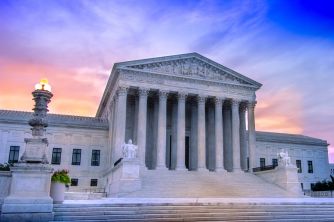
The Supreme Court, on Tuesday (May 14), allowed Texas to immediately begin enforcing a controversial immigration law, Senate Bill 4 (S.B. 4), which permits state officials to arrest and detain individuals suspected of entering the country illegally. This decision represents a temporary victory for Texas in its ongoing battle with the Biden administration over immigration policy.
The law, signed by Republican Governor Greg Abbott in December, criminalizes illegal entry into Texas and authorizes state judges to order deportations. Historically, immigration enforcement has been a federal responsibility, raising significant legal and constitutional questions about S.B. 4.
Initially, a federal judge in Austin blocked the implementation of S.B. 4, but the 5th U.S. Circuit Court of Appeals granted a temporary stay on this decision, setting the stage for the Supreme Court's involvement. The Court had paused the law from taking effect, but Tuesday’s order reversed this, allowing enforcement to proceed while legal challenges continue.
The Court's three liberal justices dissented, expressing concerns about the implications of the law. Justice Sonia Sotomayor, joined by Justices Ketanji Brown Jackson and Elena Kagan, warned that the order could lead to increased chaos and crisis in immigration enforcement, undermining the federal government’s authority and disrupting sensitive foreign relations.
Governor Abbott welcomed the Supreme Court’s decision as a positive development, although he acknowledged that the case would continue in the appeals court. Conversely, the Biden administration expressed strong opposition. White House Press Secretary Karine Jean-Pierre criticized the ruling, arguing that it would make communities in Texas less safe and complicate law enforcement efforts.
Immigration advocates have raised concerns about potential increases in racial profiling and the broader implications of allowing state authorities to handle immigration enforcement. With Latinos representing 40% of Texas’s population, there are fears that S.B. 4 could lead to disproportionate targeting of minority communities.
Justice Amy Coney Barrett, joined by Justice Brett Kavanaugh, emphasized in a concurring opinion that the Supreme Court typically does not review decisions regarding administrative stays, suggesting that it would be unwise to set a precedent of intervening at this preliminary stage. This viewpoint underscores the temporary nature of the decision, with the potential for further judicial review as the case progresses.
The New Orleans-based 5th Circuit Court of Appeals is scheduled to hear arguments on April 3 regarding whether to maintain the law while addressing broader legal challenges. If the 5th Circuit does not issue a timely decision, this case may return to the Supreme Court.
Tami Goodlette, an attorney representing some of the law’s challengers, described the Supreme Court’s order as “unfortunate” and emphasized the commitment to overturning S.B. 4, arguing that no state should have the power to override federal immigration authority.
Migrant crossings at the U.S.-Mexico border have recently decreased following record highs in December. U.S. Border Patrol data indicates a significant drop in apprehensions, which officials attribute to enhanced enforcement measures by Mexico and ongoing diplomatic efforts.
The Biden administration, along with several immigration advocacy groups and El Paso County, is challenging S.B. 4, arguing that it disrupts the longstanding federal-state balance in immigration enforcement. The administration contends that states should not regulate core aspects of immigration, a domain traditionally reserved for the federal government.
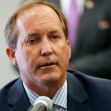
Texas officials, including Attorney General Ken Paxton, argue that the state has the right to protect itself from transnational crime and manage its border security, positioning Texas as the nation’s first line of defense against such threats.
Some Texas law enforcement officials have expressed concerns about the practical implications of S.B. 4. Maverick County Sheriff Tom Schmerber and Bexar County Sheriff Javier Salazar have indicated that their departments will be cautious in enforcing the law to avoid overstepping legal boundaries and engaging in racial profiling.
The Department of Homeland Security (DHS) criticized the Supreme Court's decision, warning that it could disrupt immigration enforcement and complicate the agency's ability to manage border security. DHS emphasized that immigration control is exclusively a federal responsibility.