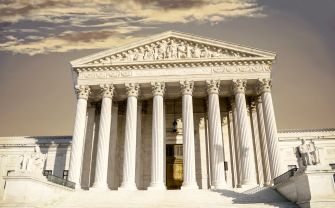
The Supreme Court on April 29, 2026, struck down Louisiana’s second majority-Black congressional district, ruling that the map relied too heavily on race, in violation of the Constitution’s Equal Protection Clause. In a 6–3 decision, the justices affirmed a lower court ruling in a decision that limits when states may use race in drawing congressional districts.
The dispute began after Louisiana redrew its congressional map following the 2020 census, with a plan that included one district in which Black voters made up a majority, a configuration that was challenged by civil rights groups as diluting minority voting strength.
A federal court later found the map likely violated Section 2 of the Voting Rights Act and directed the state to create a second district in which Black voters would make up a majority. Louisiana responded by adopting a revised map, known as SB8, which added another district linking Black communities across several regions.
A separate group of voters then challenged the revised map, arguing it was drawn primarily based on race. A three-judge federal court agreed and blocked the map, finding that race was the dominant factor in drawing the district. The case, Louisiana v. Callais, was later taken up by the Supreme Court.
The Supreme Court agreed with the lower court’s analysis, finding that race was the predominant factor in drawing the revised district. The justices said Louisiana’s effort to comply with the earlier order did not justify the way race was used in drawing the map. The Court also said that compliance with the Voting Rights Act does not automatically justify the use of race.
The Voting Rights Act of 1965 was enacted to address racial discrimination in voting and to ensure that minority voters have equal access to the political process. The law remains one of the central federal protections governing how states draw electoral districts, particularly in areas with a history of discrimination.
Section 2 of the Voting Rights Act prohibits voting practices that deny minority voters an equal opportunity to participate in elections and to elect candidates of their choice. To prove a violation, challengers must show that a district map leaves minority voters with less opportunity than others and that the difference is linked to race. The Court said it is not enough to show that a second district could be drawn or that election results differ.
Courts must also distinguish between race and political behavior. Voting patterns often follow party lines, and the law does not prevent states from drawing districts based on political considerations. A claim under Section 2 must show that race, not politics, explains the outcome.
The Constitution separately limits when the government may rely on race. Any use of race must meet a strict legal standard, requiring a strong justification and a showing that no workable alternative would achieve the same result. A map drawn mainly based on race is considered a racial gerrymander and is unconstitutional unless it meets that standard.
In evaluating the revised map, the Court said challengers must show more than different election outcomes and must demonstrate that any disadvantage is caused by race rather than political preferences. The justices also looked back at the earlier challenge to Louisiana’s first map drawn after the 2020 census and found that those claims did not show that a second majority-Black district was required under federal law.
The Court ruled the SB8 map unconstitutional and returned the case for further proceedings.