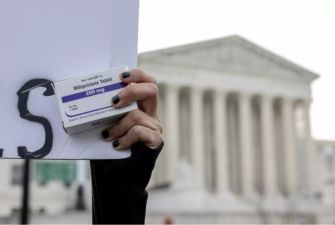
The Supreme Court on Thursday kept current nationwide access to the abortion medication mifepristone in place, blocking lower court limits that would have required in-person doctor visits and halted distribution through the mail while the case moves forward.
Louisiana initially filed a lawsuit seeking to roll back Food and Drug Administration policies that expanded access to the medication. State officials argue the federal rules allowing abortion pills to be prescribed remotely and shipped by mail interfere with the state’s abortion laws and raise safety concerns involving the drug.
The order blocks a ruling from the 5th U.S. Circuit Court of Appeals that would have required patients to see a doctor in person before receiving mifepristone. The appellate ruling also would have halted telehealth appointments and mail delivery for the medication while the case continued.
Earlier this month, the Supreme Court temporarily paused the appellate ruling while reviewing emergency requests filed by the drug manufacturers, delaying the restrictions from taking effect while the justices considered the emergency appeals.
Danco Laboratories and GenBioPro, the companies that manufacture mifepristone, asked the Supreme Court to block those restrictions while the appeal moves forward. The companies argued the lower court ruling would disrupt nationwide access to the medication while the appeal continues.
FDA changes made over the last several years expanded access to the medication. The agency approved mifepristone in 2000 and later removed in-person dispensing requirements as access to abortion medication expanded through telehealth services and mail delivery. Mifepristone is commonly used with another drug, misoprostol, in medication abortions, which account for a majority of abortions in the United States.
Several pharmaceutical companies and medical organizations also weighed in during the case. Attorneys representing the groups argued in court filings that limiting access to mifepristone despite FDA approval could weaken the federal drug approval system and create uncertainty for other federally regulated medications.
Justices Clarence Thomas and Samuel Alito dissented. Thomas argued the drug manufacturers, Danco Laboratories and GenBioPro, were seeking protection from financial losses tied to conduct he argued violated federal law. Alito separately wrote that abortion providers and organizations mailing the pills into Louisiana were interfering with the state’s abortion restrictions.
Much of the dissent centered on the Comstock Act, a federal law from the 1800s that prohibits mailing items connected to abortion. Although the statute has largely gone unenforced for decades, abortion opponents have increasingly pointed to the law in lawsuits involving abortion pills sent across state lines.
Thomas argued that mailing abortion medication may violate the statute, while abortion-rights advocates and legal scholars dispute that interpretation.
The lawsuit is part of a growing number of abortion cases filed after Roe v. Wade was overturned involving conflicts between state abortion laws and federal drug regulations. While states gained broader authority to regulate abortion, the FDA still controls how prescription drugs are approved and distributed nationwide.
The ruling leaves current nationwide access to mifepristone in place while litigation over the FDA’s policies returns to lower courts.