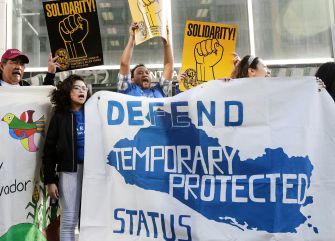
The Trump administration is ending Temporary Protected Status (TPS) for nationals of Honduras and Nicaragua, a decision that will affect tens of thousands of people who have lived legally in the United States since the late 1990s. The Department of Homeland Security (DHS) published notices on Monday stating that protections for both groups will be terminated 60 days after the announcements are formally published in the Federal Register.
According to DHS estimates, approximately 72,000 Hondurans and 4,000 Nicaraguans currently hold TPS. However, advocacy groups such as the National TPS Alliance say the number of Hondurans directly affected is likely closer to 40,000, as many have adjusted their status through other immigration pathways. In response to the announcement, the Alliance filed a federal lawsuit Monday in the Northern District of California against DHS Secretary Kristi Noem and the department, alleging the decision is unlawful.
The notices state that Secretary Noem determined conditions in Honduras and Nicaragua have improved sufficiently over the last two decades. Citing improvements in economic development, tourism, and foreign investment, DHS concluded that the original circumstances justifying TPS no longer exist.
TPS is a humanitarian program created by Congress in 1990. It allows nationals of designated countries facing armed conflict, environmental disaster, or other extraordinary conditions to live and work in the U.S. temporarily.
The designation was extended to Hondurans and Nicaraguans in 1999 following the widespread devastation caused by Hurricane Mitch the previous year. While TPS offers protection from deportation and authorization to work, it does not provide a direct path to citizenship. Recipients must re-register periodically, typically every 18 months. Although previous administrations extended these designations multiple times, the Trump administration has moved to end them, arguing that the initial emergency no longer justifies continued protection.
While DHS has framed the move as a return to the original purpose of the law, the administration’s broader record reflects a series of TPS terminations. It has already announced the end of protections for nationals of Venezuela, Haiti, Ukraine, Nepal, Afghanistan, and Cameroon.
Expiration dates are also approaching for beneficiaries from Ethiopia, Syria, Yemen, and El Salvador.