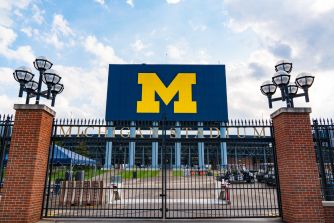
A University of Michigan student has filed a federal lawsuit alleging she was wrongly accused of using artificial intelligence to complete coursework because of writing traits linked to her documented disabilities.
Filed earlier this month in federal court, the complaint names the university and select staff members, including former professor Theo Nash, and alleges disability discrimination under the Americans with Disabilities Act and the Rehabilitation Act. The student, who has not identified herself, says she was accused of using AI to draft at least five essays during the fall 2024 semester.
According to the filing, she has generalized anxiety disorder and obsessive-compulsive disorder. The complaint states that behavioral traits connected to those conditions, including “formal tone, meticulous structure, stylistic consistency, and heightened distress during oral confrontation,” were interpreted as signs of artificial or dishonest behavior. It argues that those characteristics are not proof of AI misuse.
She was accused on three separate occasions of using AI technology, allegations she strongly denies.
Despite her efforts to demonstrate that she had not used artificial intelligence, the university moved forward with disciplinary action, placing her on academic probation and issuing a no-record grade on her transcript. She alleges that disability accommodations were not provided during the academic integrity process, even after formally notifying the university of her documented conditions and need for support.
Under federal law, public universities must provide reasonable accommodations to qualified students with disabilities and cannot penalize individuals because of disability-related traits. The lawsuit contends the university failed to adjust its review process accordingly and instead treated her writing style as evidence of misconduct.
In December 2024, she filed a joint civil rights complaint with the U.S. Department of Education’s Office for Civil Rights and the university’s Equity, Civil Rights, and Title IX Office. The federal agency dismissed the complaint in January 2025.
She states that the no-record grade and disciplinary action blocked her from graduating, threatening her post-graduation educational plans. The lawsuit asks the court to remove any negative academic markings tied to the allegations, block further penalties, and require a disability-informed review process. She is seeking unspecified damages. The university has not publicly responded to the lawsuit.