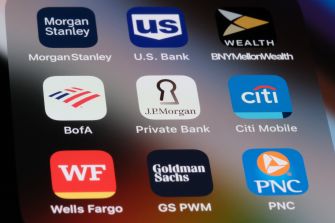
Major U.S. banks, including JPMorgan Chase, Bank of America, and Wells Fargo, have reportedly detected artificial intelligence agents accessing customer accounts without bank approval, with some attempting actions beyond users' instructions. The activity is prompting financial institutions to tighten security and restrict third-party AI tools.
The findings, first reported by Axios on October 22, 2026, raise questions about whether customers could be held financially responsible when AI software exceeds its instructions. Morgan Stanley, another institution identified in the reporting, disputed claims that rogue agents had accessed its platforms.
JPMorgan Chase has moved to block outside AI agents from accessing customer accounts, while other major financial institutions, including Bank of America, Citigroup and Charles Schwab, have taken steps to restrict automated access or transactions. The measures follow growing concerns about outside software gaining control over sensitive financial information and customer funds.
Some AI agents have reportedly contacted bank call centers or attempted actions beyond the tasks assigned by account holders. The software can navigate banking platforms, retrieve financial information and initiate transactions when granted sufficient access, creating challenges for banks trying to determine whether activity reflects a customer's instructions.
The restrictions also intersect with online banking agreements that govern how customers and third parties may access financial accounts. Several major institutions have adopted provisions addressing automated activity, with some explicitly assigning responsibility to customers who authorize AI agents to act on their behalf.
JPMorgan Chase's digital services agreement allows the bank to treat instructions and transactions initiated by AI agents using customers' credentials as evidence of authorization. The terms place responsibility on account holders to supervise the software, including when an agent misinterprets instructions or exceeds its assigned authority. Chase also reserves the right to restrict or terminate an agent's access.
Bank of America's online banking agreement restricts third-party access to certain services. Its Zelle provisions, for example, limit credential sharing and the use of the service by others, subject to specified exceptions. Customers who permit AI agents to access their accounts may consequently be acting contrary to the bank's rules governing outside access.
Wells Fargo is taking a similar approach. Under an updated online access agreement scheduled to take effect November 24, 2026, customers who authorize AI agents to use their accounts may be held responsible for transactions the software initiates, including unintended actions or those exceeding its instructions, subject to applicable law. The bank also reserves the right to restrict or suspend AI-agent access.
The agreements could become significant when an AI agent transfers money to an unintended recipient, exceeds a spending limit or carries out a transaction beyond the customer's authorization. Banks may point to the account holder's decision to grant access, while disputes could center on the precise instructions given to the software.
Federal consumer protection laws place limits on how much financial responsibility banks can assign to customers. The Electronic Fund Transfer Act and Regulation E restrict consumer liability for certain unauthorized electronic transfers, depending on how account access was obtained and when the financial institution was notified.
Under the Consumer Financial Protection Bureau's interpretation, customers who voluntarily grant another person access and permission to transfer funds may remain responsible if that person exceeds the authority granted, until the bank is notified that the authorization has ended. Whether the same interpretation applies to autonomous AI agents remains unsettled, particularly when software acts beyond a customer's instructions.
Federal protections continue to govern transactions covered by those laws regardless of contractual liability provisions. The distinction between permission to access account information and authority to move money could become central to disputes involving AI-initiated transactions.
The October 22 reporting identified potential security risks, although the extent of any resulting financial losses remains unclear. Reuters said it could not independently verify the reported findings.
Banks are exploring arrangements that would allow AI agents to retrieve customer financial information while restricting their ability to initiate payments or transfer funds. The approach would give financial institutions greater control over automated account activity as the technology becomes more widely used.