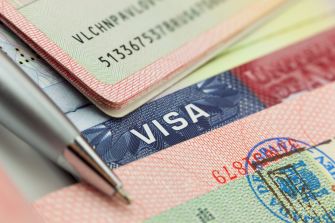
The U.S. State Department will pause issuing immigrant visas at U.S. consulates worldwide for applicants who are nationals of 75 countries beginning January 21, 2026, citing concerns that applicants from those countries present a higher risk of becoming a “public charge,” a term used in immigration law for people deemed likely to rely on government assistance.
In a notice posted on Travel.State.Gov and updated January 14, the department said it is conducting a “full review” of policies, regulations, and guidance to ensure immigrants are “financially self-sufficient” and do not “utilize welfare in the United States or become a public charge.”
The department’s guidance makes clear that the pause focuses on immigrant visas, which are used for permanent residence, and does not apply to tourist visas. The notice states that immigrant visa applicants who are nationals of affected countries may still submit applications and attend interviews, and consulates will continue to schedule appointments, but “no immigrant visas will be issued” to those nationals during the pause.
A narrow exemption applies to certain dual nationals. The State Department said dual nationals are exempt if they apply using a valid passport from a country not on the list. The agency also said no immigrant visas have been revoked under the guidance and directed questions about admission at the border to the Department of Homeland Security.
Reuters, citing a State Department cable reviewed by the news agency, reported that the pause is part of an “intensifying immigration crackdown” and that the cable referenced indications that nationals from the affected countries had sought public benefits in the United States. Reuters also reported that consular officers were directed to refuse certain cases that had been “print-authorized” but not yet printed, as well as visas printed but still inside the consular section—steps that would halt issuances already in the final stages.
The list of affected countries spans multiple regions, including parts of Latin America, Africa, the Middle East, South Asia, and Eastern Europe. The State Department’s posting identifies the impacted nationalities as: Afghanistan, Albania, Algeria, Antigua and Barbuda, Armenia, Azerbaijan, Bahamas, Bangladesh, Barbados, Belarus, Belize, Bhutan, Bosnia and Herzegovina, Brazil, Burma, Cambodia, Cameroon, Cape Verde, Colombia, Cote d’Ivoire, Cuba, Democratic Republic of the Congo, Dominica, Egypt, Eritrea, Ethiopia, Fiji, The Gambia, Georgia, Ghana, Grenada, Guatemala, Guinea, Haiti, Iran, Iraq, Jamaica, Jordan, Kazakhstan, Kosovo, Kuwait, Kyrgyz Republic, Laos, Lebanon, Liberia, Libya, Moldova, Mongolia, Montenegro, Morocco, Nepal, Nicaragua, Nigeria, North Macedonia, Pakistan, Republic of the Congo, Russia, Rwanda, Saint Kitts and Nevis, Saint Lucia, Saint Vincent and the Grenadines, Senegal, Sierra Leone, Somalia, South Sudan, Sudan, Syria, Tanzania, Thailand, Togo, Tunisia, Uganda, Uruguay, Uzbekistan, and Yemen.
The State Department has not specified an end date for the pause in its public posting. It described the change as a pause in issuances while it completes its review, leaving applicants and U.S.-based sponsors uncertain how long cases could remain in limbo after interviews are completed.
While the administration has emphasized illegal border crossings in recent immigration messaging, the suspension concerns legal immigration pathways that typically run through U.S. consulates abroad. Immigrant visas are commonly used by family-sponsored applicants and many employment-based immigrants who complete “consular processing” outside the United States. Under the State Department’s guidance, an applicant could proceed through normal steps up to and including the consular interview, but still be unable to receive the visa needed to enter the United States as a permanent resident if they are a national of one of the listed countries.
The government’s stated rationale centers on public-charge screening, a long-standing concept in U.S. immigration law that assesses whether an applicant is likely to become primarily dependent on government support. The new policy does not purport to change the definition of “public charge” in the abstract. Instead, it places certain nationalities into a blanket pause category while the State Department reviews its screening approach, effectively shifting the immediate impact from individualized determinations to a country-based suspension in issuance.
The policy drew criticism from immigration advocates and analysts who argue it targets lawful immigration rather than fraud or security threats. Reuters reported that David Bier, the Cato Institute’s director of immigration studies, characterized the move as restricting legal immigration and estimated it could turn away about 315,000 legal immigrants over the next year.
The pause has also raised practical questions for employers and families who have been waiting months or longer for consular appointments and approvals. Even where interviews continue, the lack of issuances could create backlogs abroad and complicate travel plans and relocation timelines, particularly for families separated across borders. The State Department’s FAQ provides little detail beyond the dual-nationality exemption and the assurance that tourist visas are not covered.
The move was reported by multiple news outlets, including CNN, and has been tracked by immigration and compliance organizations following changes to consular policy.