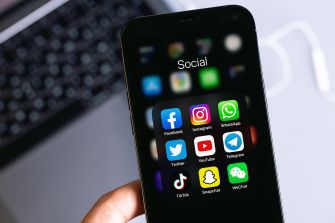
Meta CEO Mark Zuckerberg took the stand in a Washington, D.C., courtroom Monday, facing federal antitrust allegations that could dismantle core pillars of his social media empire. The Federal Trade Commission (FTC) is seeking to force Meta Platforms Inc. to divest Instagram and WhatsApp, arguing that Facebook’s acquisitions of the two apps more than a decade ago were part of a calculated effort to suppress competition and entrench its dominance in the social media marketplace.
The case, originally filed during former President Donald Trump’s first term, marks one of the most consequential antitrust challenges brought against a U.S. technology company in decades.
Central to the FTC’s case is the assertion that Meta’s acquisitions of Instagram in 2012 and WhatsApp in 2014 were not about innovation, but rather a deliberate move to neutralize emerging rivals. “These deals established entry barriers that for more than a decade protected Meta's dominance,” said FTC attorney Daniel Matheson during opening arguments. He contended that consumers now lack “reasonable alternatives” for platforms designed to connect users with friends and family.
Zuckerberg’s testimony is expected to focus on internal company emails and statements suggesting he viewed Instagram and WhatsApp as existential threats to Facebook at the time. One such communication outlined concerns that Instagram’s rapid growth could outpace Facebook, prompting a strategy to buy out the company before it became a serious competitor. Another email revealed apprehension that WhatsApp’s encrypted messaging could evolve into a rival social platform.
The FTC argues that these communications reveal Meta’s intent to maintain monopoly power by stifling competition in the personal social networking space—defined by the agency as platforms where users connect primarily with people they know. According to the FTC, competing services like TikTok, YouTube, and Reddit—where content is often shared with broader audiences based on interest rather than personal connection—are not viable substitutes.
Meta’s legal team disputes that characterization. In court, attorney Mark Hansen framed the case as a misguided attempt to unwind years-old transactions that have since benefited consumers. “This case is a grab bag of FTC theories at war with the facts and at war with the law,” he said. He also argued that the social media landscape has fundamentally changed, pointing to the explosion of short-form video content on TikTok and Instagram’s own Reels feature.
Meta’s defense hinges on showing that competition in the market is alive and well. The company plans to cite evidence that Facebook and Instagram users spend most of their time watching video content, and that a temporary U.S. ban of TikTok in January led to measurable increases in user engagement on Meta platforms—proof, they say, of a competitive dynamic.
Still, if the FTC prevails, the consequences for Meta could be severe. Instagram alone is a financial powerhouse for the company. While Meta does not disclose app-specific revenues, advertising research firm Emarketer estimated Instagram will bring in over $37 billion this year—more than half of Meta’s U.S. advertising income. Instagram also generates more revenue per user than Facebook, making it the linchpin of Meta’s domestic business strategy.
WhatsApp, in contrast, has contributed little to Meta’s top line but boasts the largest daily user base among Meta’s apps. Zuckerberg has identified WhatsApp’s “business messaging” features, including AI-driven chatbots and payment systems, as key to Meta’s future growth.
If the FTC wins the first phase of the trial, it will then face the additional burden of proving that divesting Instagram or WhatsApp would effectively restore competition in the market. That second trial could stretch into 2026, setting the stage for a prolonged legal and regulatory battle with sweeping implications for the tech sector.
The case is part of a broader government crackdown on major technology platforms. Antitrust lawsuits have also been filed against Amazon, Apple, and Google, continuing a bipartisan push to rein in what lawmakers on both sides have described as excessive concentration of power in Big Tech.
While several of these companies have shifted their public posture since Trump’s return to national political prominence—curtailing diversity initiatives and engaging more openly with the White House—those moves have not halted regulatory scrutiny. Meta, for instance, has rolled back some content moderation practices criticized by conservatives and reportedly donated $1 million to Trump’s inauguration, but still finds itself at the center of a renewed antitrust campaign.
U.S. District Judge James Boasberg, who is presiding over the trial, has previously acknowledged the complexity of the FTC’s claims. In a 2023 pretrial ruling, Boasberg noted the agency “faces hard questions about whether its claims can hold up in the crucible of trial.”
Those questions will now play out in open court, with Zuckerberg’s testimony as a centerpiece. The trial is expected to continue through July, with the potential to reshape Meta’s business.