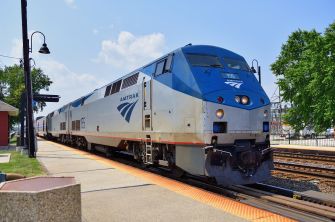
A federal judge has dismissed a wrongful death lawsuit against Amtrak and BNSF Railway after a woman climbed over a stopped freight train while leaving a Washington beach and was struck and killed by an approaching passenger train.
U.S. District Judge Ricardo S. Martinez ruled Thursday, October 29, 2026, that Anna Baisheva knowingly accepted the danger of crossing active railroad tracks near Everett, Washington. The decision also cleared the City of Everett and Snohomish County of negligence claims brought by her estate.
Baisheva and her husband had gone fishing along the shoreline near Harborview Park on July 25, 2024. After parking at the park, they walked nearly half a mile along a railroad service road and crossed two sets of BNSF tracks to reach the beach.
Several hours later, the rising tide and Baisheva’s need to use a restroom prompted the couple to leave. A stopped BNSF freight train blocked their route and stretched beyond their view in both directions. Concerned about falling into the water if they continued along the shoreline, they decided to climb over the stationary train using a ladder attached to one of its railcars.
Baisheva climbed first and crossed the railcar before descending between two sets of tracks. Video evidence showed that she did not look left toward an approaching Amtrak passenger train. Moments later, the train struck and killed her.
Bruce Wolf, representing Baisheva’s estate and its beneficiaries, sued Amtrak, BNSF, Everett and Snohomish County for negligence. The estate argued that years of pedestrians crossing the tracks to reach the shoreline made the area appear safe.
Lawyers also pointed to rusted railcars and tracks that appeared abandoned, arguing that those conditions could suggest some tracks were no longer in use. The stopped freight train also blocked Baisheva’s view of the approaching passenger train.
Martinez rejected those arguments after reviewing evidence that Baisheva had seen trains operating in the area during earlier visits. She had also watched the BNSF freight train arrive and stop shortly before attempting to cross it.
Washington’s assumption-of-risk doctrine can bar recovery when someone understands a specific danger and voluntarily encounters it. Martinez found that Baisheva knew the tracks were active and chose to climb over a railcar that blocked her view of approaching trains.
The railroads also prevailed on whether Baisheva’s actions were reasonably foreseeable. Although pedestrians frequently crossed the tracks to reach the shoreline, the estate presented no evidence that people routinely climbed over stopped freight trains or that the companies knew of such conduct.
Everett and Snohomish County faced separate claims involving access to the shoreline. The estate argued that their responsibility extended to areas where park visitors could reasonably be expected to go.
Martinez found that the railroad tracks were outside the governments’ control and that neither had encouraged visitors to cross them. Warning signs, fencing, and a locked gate marked the railroad property, while nearby Howarth Park provided public beach access through a pedestrian bridge.
The judge concluded that the city and county had no legal duty to protect Baisheva from the danger posed by the tracks, ending the wrongful death case against all four defendants before trial.