California and 21 other states sued the Trump administration Monday to stop a new rule that would let immigration officers consider Medicaid, food assistance and other public benefits when deciding whether some immigrants qualify for green cards.
The rule is set to take effect Sept. 18, giving federal officers broader discretion under the government’s “public charge” test. The long-standing provision of immigration law can prevent certain noncitizens from obtaining lawful permanent residency if officials determine they are likely to become dependent on government support.
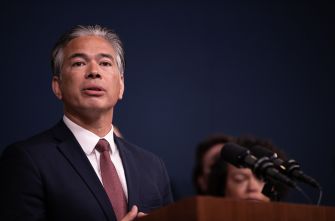
California Attorney General Rob Bonta is co-leading the challenge with New York Attorney General Letitia James and Illinois Attorney General Kwame Raoul. The District of Columbia also joined the case, while Pennsylvania is participating through Gov. Josh Shapiro.
Filed in the U.S. District Court for the Southern District of New York, the lawsuit argues the Department of Homeland Security exceeded its authority and violated the Administrative Procedure Act when it adopted the new policy.
At issue is how far immigration officers can go when considering an applicant’s use of government assistance.
Rules adopted under the Biden administration in 2022 generally limited the public charge review to cash assistance for income maintenance and government-funded long-term institutional care. SNAP food assistance and most Medicaid benefits fell outside that analysis.
The Trump administration’s rule rescinds the 2022 framework and restores broader discretion to immigration officers. Benefits that previously fell outside the public charge review may now become part of an applicant’s overall immigration assessment.
Receiving Medicaid, food assistance or another public benefit does not by itself determine whether someone will be denied a green card. Officers must consider the applicant’s broader circumstances when deciding whether the public charge provision applies.
The timing of the rule also limits how earlier benefit use can be treated. DHS says means-tested benefits received before Sept. 18 will be evaluated under the standards in place at the time, while the broader framework applies to covered applications for admission or adjustment of status filed once the new rule takes effect.
Bonta and the other state officials argue DHS has stretched the public charge provision beyond the authority Congress gave the agency. Their lawsuit says the provision historically focused on immigrants expected to become primarily dependent on government support.
The states also say the policy could cause immigrants and their families to avoid healthcare, food assistance and other programs they are legally eligible to receive out of concern that participation could later affect an immigration decision.
DHS has defended the change, saying the 2022 rule placed overly narrow limits on immigration officers. The department said the new framework will allow officials to consider all relevant facts when determining whether an applicant is likely to become a public charge.
A separate coalition that includes New York City, Chicago, San Francisco, Santa Clara County, Seattle and King County, Washington, filed its own lawsuit Monday challenging the same rule.
The legal battle revives a fight from Trump’s first term. His administration adopted a broader public charge policy in 2019 that allowed officials to consider programs including Medicaid and food assistance. Court challenges followed, and the Biden administration later replaced that policy with the narrower 2022 framework.
California and the other states are asking the federal court to declare the new rule unlawful and set it aside. Unless a judge blocks it, the expanded public charge policy takes effect Sept. 18.