Across the United States, the need for mental health and substance use treatment has become impossible to separate from the question of access. Families can recognize when someone is struggling, patients can have insurance coverage, and doctors can recommend treatment, but none of that helps much if an appointment is weeks away or there is no qualified provider nearby. California’s decision to withhold funding from county behavioral health plans that repeatedly miss access standards is important for that reason: it puts real financial pressure behind the promise that behavioral health care should be available when patients actually need it.
California has begun withholding Medi-Cal behavioral health funding from 10 county plans after repeated failures to meet state and federal standards for provider networks and timely access to mental health and substance use disorder treatment.
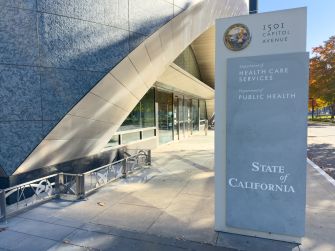
The California Department of Health Care Services announced the temporary withholds on August 12 after the affected plans failed to correct deficiencies over two consecutive certification cycles. The action comes at a time when California is expanding behavioral health services, investing heavily in workforce development, and asking counties to meet a new set of accountability requirements that took effect July 1.
The counties facing temporary funding withholds are Merced, San Mateo, Santa Clara, Shasta, Tehama, Ventura, Napa, Fresno, Tulare, and San Francisco.
Merced, San Mateo, Santa Clara, Shasta, Tehama and Ventura were cited for deficiencies involving Specialty Mental Health Services. Napa, Fresno and Tulare had deficiencies involving the Drug Medi-Cal Organized Delivery System. San Francisco had deficiencies in both programs.
DHCS did not say how much funding will be withheld from each county. The department said the money will be released once a behavioral health plan demonstrates that it has returned to compliance. Plans under sanction will also receive enhanced monitoring, including regular progress reports and technical assistance.
The decision represents a step beyond the corrective measures the state has used in earlier years. DHCS said it had already provided technical assistance and required corrective action plans before moving to financial consequences.
During the 2025-26 certification cycle, the state evaluated plans against 43 standards for Specialty Mental Health Services and 46 standards for Drug Medi-Cal Organized Delivery System services. Those reviews include measures such as provider-to-member ratios, appointment wait times, and geographic access.
For patients, those numbers tell a much more personal story. Having behavioral health coverage does not always mean being able to see a psychiatrist, therapist, or substance use treatment provider when care is needed. Long waits, limited provider networks, and shortages of specialists can turn an available benefit into care that is difficult to reach in practice.
That gap can be especially important in behavioral health, where delays may allow symptoms to worsen or make it harder for patients to stay engaged in treatment.
California law gives DHCS authority to act when contractors fail to meet those obligations. Under Welfare and Institutions Code Section 14197.7, the department may impose sanctions for violations of contractual requirements, state or federal law, regulations, the state Medicaid plan, or approved waivers. The statute specifically allows DHCS to identify deficiencies through network adequacy reviews and assessments of timely access requirements.
For mental health plans and entities providing Drug Medi-Cal services, the law permits DHCS to temporarily withhold funds in amounts it considers necessary to encourage correction of a violation. The department must release the money after determining that the plan has returned to compliance. Plans also have the right to challenge a temporary withhold through an administrative appeal.
DHCS described the current action as the first stage of a graduated enforcement process. Counties that remain out of compliance could face additional withholds or monetary sanctions.
The timing is significant because California is also moving into a broader restructuring of its behavioral health system.
On July 1, the state formally transitioned from the Mental Health Services Act to the Behavioral Health Services Act, or BHSA, after voters approved Proposition 1 in 2024. The law gives counties new planning, reporting, and accountability responsibilities.
Counties must prepare three-year Integrated Plans for Behavioral Health Services and Outcomes that describe projected funding, spending, services, workforce strategies, and performance goals. They must also submit annual reports covering service use, outcomes, expenditures, and workforce information.
The BHSA gives DHCS a separate enforcement path. Welfare and Institutions Code Section 5963.04, which became operative July 1, allows the department to require corrective action and, for certain violations, temporarily withhold funding or impose monetary sanctions. Funds withheld under that authority must be released after a county returns to compliance.
The August 12 Medi-Cal sanctions were imposed under the state’s existing enforcement system, rather than as penalties under the BHSA. Still, the two frameworks show how California is building multiple ways to connect public funding with measurable access and performance requirements.
The state is also investing in one of the hardest problems behind those standards: finding enough behavioral health professionals and making sure they are available where patients need them.
Through the Behavioral Health Community-Based Organized Networks of Equitable Care and Treatment initiative, known as BH-CONNECT, California has committed $1.9 billion over five years to behavioral health workforce development. The initiative includes scholarships, student loan repayment, recruitment and retention programs, provider training, and residency programs.
BH-CONNECT also includes a separate $1.9 billion incentive program for participating behavioral health plans. Those payments are tied to improvements in areas such as timely access, use of community-based services, and patient outcomes.
That combination of enforcement and investment matters. Counties are being asked to improve access while the state also acknowledges that workforce shortages can make those improvements difficult to achieve.
For the 10 counties now facing withheld funding, the challenge is immediate. DHCS has said the money will be restored as deficiencies are corrected, while unresolved violations can lead to further enforcement.
The larger question reaches well beyond the counties named in the August action. California is spending billions of dollars to expand behavioral health capacity while strengthening oversight of the systems responsible for delivering care.
For Medi-Cal patients, the most meaningful measure will be simpler: whether they can find a qualified provider and receive treatment when they need it.
As California’s new behavioral health structure takes shape, the state appears to be making that outcome increasingly central to how public dollars are distributed, monitored, and, when necessary, withheld.