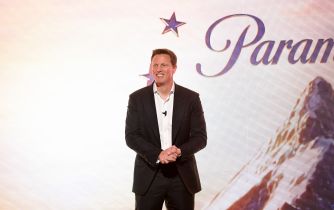
Paramount CEO David Ellison told employees Monday that the company is tentatively planning to close its Warner Bros. Discovery merger in about two weeks, giving staff the clearest timeline yet for when the two Hollywood giants could formally combine.
Ellison disclosed the target in a memo after Paramount reached settlements with 12 state attorneys general and the Writers Guild of America, resolving lawsuits that had threatened to keep the transaction tied up in court into 2027.
“With both groups’ concerns now addressed, we have complete clearance for this merger and can move toward closing,” Ellison wrote. He cautioned that additional work remains before the transaction is finalized.
A closing roughly two weeks from Monday would place the deal in early October. The states’ settlement still requires court approval, while Ellison described the timeline to employees as tentative.
Ellison also acknowledged that employees still have questions about their roles, teams and how the combined company will operate. Paramount has previously outlined billions of dollars in expected merger savings, while the settlement includes production and worker commitments aimed at addressing some of the employment concerns surrounding the deal.
“We don’t have all the answers yet, and I won’t pretend otherwise,” Ellison told staff, describing the eventual closing as “really just the starting line.”
Under the settlement with California and 11 other states, Paramount agreed to spend at least an additional $1.5 billion on U.S. film production over five years. The combined company must also release at least 30 theatrical films annually during its first two years and 32 during each of the following three.
Both legacy studio lots must remain open, and Paramount agreed to establish a $47.5 million fund for workers affected by the merger. Other provisions include protections involving movie theater pricing, cable distribution negotiations and independent editorial oversight for CNN and CBS News.
Ellison highlighted those production commitments in his message to employees, saying the merger would create more opportunities for creative workers, production crews and staff while expanding the amount of entertainment produced by the combined company.
The settlements mark a sharp change from the legal fight that surrounded the merger through the summer. California and 11 other states sued in July seeking to block the acquisition over concerns that combining two major Hollywood studios would reduce competition, lower output and raise prices.
California Attorney General Rob Bonta has said the settlement should not be viewed as an endorsement of the merger. His office instead characterized the agreement as securing enforceable protections for workers, consumers and competition after months of litigation.
The Writers Guild also agreed to resolve its challenge while continuing to voice concerns about the effect of consolidation on entertainment workers. With both lawsuits settled, the court order that had prevented Paramount and Warner Bros. Discovery from completing the transaction is expected to be lifted as part of the resolution.
Ellison’s memo stopped short of offering employees specific details about the organizational structure that will follow the merger. The staff was instead directed to internal resources, managers and human resources representatives as integration planning continues.
The approaching close would also remove the prospect of a roughly $7 million daily fee that Paramount faced if the transaction remained unfinished after Sept. 30.
If Ellison’s timeline holds, Paramount and Warner Bros. Discovery could begin operating under the same corporate parent in early October once the final closing process and required court approval are complete.