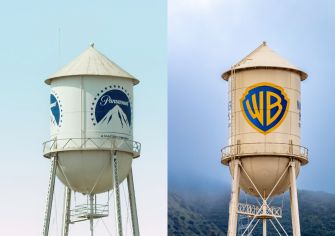
Paramount’s $110 billion acquisition of Warner Bros. Discovery has cleared its biggest remaining legal obstacles after the company reached settlements with 12 states and the Writers Guild of America, putting the Hollywood megadeal on a path toward closing after months of antitrust litigation.
The agreement with California and 11 other states would lift a July order preventing Paramount and Warner Bros. Discovery from completing the transaction. In exchange, Paramount agreed to a package of conditions that includes at least $1.5 billion in additional U.S. film production spending over five years, continued operation of both companies’ studio lots and new funding for entertainment workers. The settlement still requires court approval.
Paramount must also maintain a substantial theatrical slate after the merger, releasing at least 30 films annually during the first two years and 32 during each of the following three. At least four movies each year must come from independent producers, while shortfalls could trigger penalties of $30 million for every film below the required total. Much of that money would go toward labor and California film programs.
Movie theaters received separate protections under the agreement. Paramount committed to limits on certain price increases for exhibitors during the first three years, while the cable businesses owned by Paramount and Warner Bros. Discovery must negotiate distribution agreements separately for five years. Existing collective bargaining agreements will remain in effect.
The settlement also requires independent editorial oversight for CNN and CBS News, which would come under the same corporate parent once the transaction closes. An independent board is expected to oversee editorial standards at both networks during the five-year settlement period.
The Writers Guild separately resolved its lawsuit challenging the acquisition, removing another obstacle to closing. The union has continued to voice concerns about consolidation and its effect on writers and competition, while the state settlement replaces an effort to block the merger outright with conditions governing how the combined company operates.
California Attorney General Rob Bonta, who led the multistate lawsuit, said the settlement should not be viewed as an endorsement of the merger. His office had argued that combining two major studios could reduce competition in theatrical distribution and television programming. The agreement instead secures production commitments and other safeguards while ending the states’ effort to stop the transaction.
Concerns about employment remain. An August analysis commissioned by Los Angeles County estimated that roughly 4,500 direct film and television jobs could be at risk during a three-year integration period, with more than 10,000 job-years exposed once indirect and broader economic effects are included. County officials stressed that the figures represent modeled risk rather than announced layoffs.
The same analysis estimated that merger-related changes could place $4.06 billion in business output and $547 million in tax revenue at risk in Los Angeles County. Small businesses that depend on studio production, including transportation companies, prop houses, printers and other vendors, were among those identified as potentially vulnerable to consolidation.
Paramount has said the combined company will seek billions of dollars in savings after the transaction closes. Merger critics, including the Block the Merger coalition and former Federal Trade Commission official Alvaro Bedoya, argue that the settlement provides too little protection against job losses and further concentration in the entertainment industry. Supporters of resolving the litigation, including several Hollywood labor and exhibition groups, had increasingly pushed for certainty around the transaction as the court fight continued.
The settlement follows months of escalating pressure around Paramount’s future in California. During the litigation, the company explored the possibility of moving operations out of the state, a threat Bonta publicly criticized. The final agreement requires Paramount to maintain both legacy studio lots, though it does not guarantee that every existing California job or corporate operation will remain in place.
The deal also removes the immediate threat of a roughly $7 million daily fee that was set to begin after Sept. 30 if the acquisition remained unfinished. With the state and Writers Guild cases resolved, Paramount can move toward completing the Warner Bros. Discovery takeover once the settlement receives court approval.