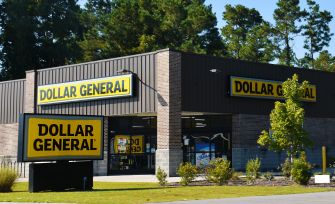
Ten more states have joined a federal lawsuit accusing Dollar General of repeatedly charging shoppers more than advertised prices, bringing the number of states pursuing the discount retailer to 30 alongside the Federal Trade Commission (FTC). The amended complaint, filed Friday, November 20, 2026, alleges that customers paid millions of dollars in excess charges while the company continued to receive complaints and fail government pricing inspections.
Delaware, Georgia, Kentucky, Maine, Minnesota, New Mexico, Oregon, Rhode Island, South Carolina and South Dakota joined the case, which was originally filed October 26 in the U.S. District Court for the Middle District of Tennessee. Regulators are seeking financial compensation for affected customers, civil penalties and a court order requiring changes to the company's pricing practices.
Dollar General received at least 29,265 customer complaints about stores charging more than marked prices between January 2023 and March 2026, according to the complaint. Those reports came from all 48 states where the retailer operates. Federal investigators also identified discrepancies during store inspections in 2026, while internal company records documented recurring pricing problems.
The FTC alleges that Dollar General knew about the discrepancies for years and allowed them to continue across its stores. Government inspections repeatedly found items ringing up at higher prices than those displayed on shelves, including products advertised as everyday essentials at discounted prices.
Previous enforcement actions had already required the retailer to address similar practices. Since 2019, Dollar General has entered into multiple settlements with state regulators over pricing violations. Ohio sued the company in November 2022 after inspectors found widespread discrepancies between shelf labels and checkout charges. A $1 million settlement reached in 2023 required the retailer to improve its pricing procedures.
The latest lawsuit cites those earlier enforcement actions as evidence that Dollar General had been repeatedly warned about its pricing practices. Regulators allege that the company continued to collect unlawful overcharges despite previous penalties and commitments to improve accuracy.
The alleged violations also affect customers who depend on Dollar General for groceries, cleaning supplies and other household necessities. A substantial portion of the retailer's business comes from lower-income households, while many of its stores serve smaller and rural communities. Regulators contend that inaccurate pricing imposes additional costs on shoppers who rely on advertised discounts when budgeting for everyday purchases.
Dollar General disputed the allegations in an October 26 statement, saying it aims for complete accuracy between shelf and register prices. The company acknowledged that occasional discrepancies occur and said employees are instructed to correct errors when customers identify them. It also maintained that recent improvements have strengthened its pricing procedures.
The retailer said it cooperated with the FTC's investigation, providing more than 200,000 documents and making company representatives available for sworn testimony. Dollar General also challenged the agency's proposed calculation of consumer compensation, arguing that the amount sought substantially exceeded a reasonable estimate of pricing discrepancies.
Company officials said they attempted to negotiate a settlement before the original complaint was filed and remain willing to discuss a resolution. Dollar General has pledged to vigorously defend the lawsuit.
The FTC and participating states allege violations of federal and state consumer protection laws, including the FTC Act and the Gramm-Leach-Bliley Act. Dollar General disputes the agency's interpretation of the latter law as a basis for monetary recovery.
Federal and state regulators are asking the Tennessee court to order compensation for consumers, impose financial penalties and require changes intended to prevent further overcharging.