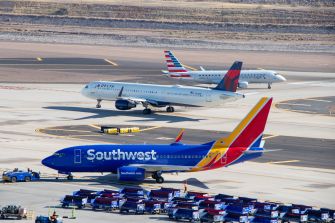
Seven major U.S. airlines are facing federal lawsuits accusing them of sharing confidential pricing information to keep domestic airfares artificially high, allegedly allowing competitors to track discounts and prevent ticket prices from falling.
American Airlines, Delta Air Lines, Southwest Airlines, Alaska Airlines and JetBlue were named in a proposed class action filed in Virginia in early November 2026. A second lawsuit, filed November 4 in Washington state, added claims involving United Airlines and Hawaiian Holdings, which is part of Alaska Air Group.
Both complaints accuse the carriers of exchanging sensitive pricing and passenger-demand information through the Airline Tariff Publishing Company (ATPCO), an airline-owned technology company, and its subsidiary, 3Victors. Passengers allege the system allowed competitors to monitor ticket prices offered to individual travelers and respond when another airline lowered its fares.
The alleged arrangement relied partly on two products, Iris and PriceEye. According to the Washington complaint, Iris collected confidential flight-search data and dynamically generated ticket prices from participating airlines, while PriceEye allowed carriers to monitor competitors' offers and receive alerts about pricing changes.
Airlines that contributed their own information allegedly gained access to similar data from competitors. The passengers claim the exchange discouraged carriers from offering lower fares because rivals could quickly detect and respond to discounts that would otherwise remain private.
An analysis cited in the Virginia lawsuit found that average one-way ticket prices increased approximately 30.7% across 693 domestic routes between the first quarters of 2022 and 2026. The passengers cite the increases as evidence of reduced competition, although the figures alone do not establish that the alleged data sharing caused fares to rise.
The accusations follow an earlier federal antitrust case involving the same fare-distribution company. In December 1992, the Justice Department sued ATPCO and eight major airlines, alleging they used a computerized system to coordinate price increases and eliminate discounted fares.
Federal prosecutors identified more than 50 alleged price-fixing agreements covering hundreds of routes. The litigation resulted in settlements restricting how airlines could communicate future pricing intentions through ATPCO. Those restrictions eventually expired.
The new complaints allege the company developed another method for exchanging competitively sensitive information as airlines increasingly began offering dynamically generated fares, which can change based on individual flight searches and demand.
The passengers accuse the airlines and technology companies of violating Section 1 of the Sherman Act, which prohibits agreements that unlawfully restrict competition. Their claims focus on the alleged exchange of confidential pricing data that competitors could use to coordinate fares and limit discounts.
The Virginia lawsuit seeks to represent consumers and businesses that purchased domestic airline tickets from the five named carriers beginning November 1, 2022. The Washington case proposes additional passenger groups involving the other airlines and their parent companies.
The passengers seek compensation for alleged overcharges, including triple damages available under federal antitrust law, along with court orders stopping the challenged information-sharing practices.
ATPCO has disputed the allegations. American Airlines has also denied coordinating its pricing, maintaining that it develops and prices its products independently.
Both lawsuits are in their early stages. The airlines and technology companies will have an opportunity to challenge the complaints, while the passengers must establish that the alleged information exchange violated antitrust law. Federal judges in Virginia and Washington will also decide whether the proposed passenger groups can pursue their claims as class actions.