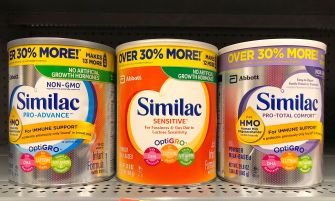
A federal judge in Chicago has dismissed a shareholder lawsuit accusing Abbott Laboratories of misleading investors about problems at the company's infant formula plant before and after a major 2022 recall, finding that the allegations did not adequately show the fraudulent intent required under federal securities law.
U.S. District Judge Steven Seeger ruled Friday that the investors may have described serious problems in Abbott's handling of its Sturgis, Michigan, facility and the resulting federal inspection, but those allegations were not enough to establish securities fraud. The judge also found that many of the company's statements about product quality, safety and regulatory compliance were too broad to support liability.
The case was brought on behalf of investors who purchased Abbott shares and was later led by European asset managers Quoniam Asset Management GmbH and KBC Asset Management NV. Their amended complaint accused Abbott and several current and former executives of violating Section 10(b) of the Securities Exchange Act of 1934 and Securities and Exchange Commission Rule 10b-5.
Shareholders claimed Abbott concealed worsening conditions at the Sturgis plant while assuring investors that the company complied with safety rules and maintained high product standards. They also alleged Abbott waited too long to disclose contamination concerns and challenged statements the company made about the circumstances surrounding the eventual recall.
Abbott voluntarily recalled certain Similac, Alimentum and EleCare powdered formulas made at Sturgis in February 2022 after federal health officials investigated reports of serious bacterial infections in infants who had consumed products made at the facility. The plant stopped production, worsening an infant formula shortage that was already being strained by supply problems associated with the COVID-19 pandemic.
FDA investigators found several environmental samples at the Sturgis facility that tested positive for Cronobacter sakazakii, a bacterium that can cause severe illness in infants. Product samples collected by the agency tested negative, however, and genetic testing did not match the available samples from sick infants to the strains found at the plant. The FDA also identified problems with Abbott's manufacturing controls and sanitation practices during its inspection.
Seeger's ruling focused on a different question from whether Abbott properly operated the plant. Federal securities law requires investors alleging fraud to show more than poor management, regulatory failures, or a damaging business event. They must adequately allege that a company made materially false or misleading statements to investors and did so with the state of mind required for securities fraud.
Section 10(b) and Rule 10b-5 are among the main federal protections against fraud in the securities markets. They can apply when a company makes an important false statement, or leaves out information that makes what it told investors misleading, in connection with buying or selling securities. A company's underlying business problems do not automatically create a securities fraud claim simply because those problems later hurt its stock price.
A central requirement is known as scienter, the legal term for the fraudulent state of mind behind the alleged deception. Federal law requires shareholders to plead specific facts supporting a strong inference that the company or its executives acted with the required intent, rather than merely making a mistake or managing the business poorly. The U.S. Supreme Court has held that the inference of fraudulent intent must be at least as compelling as other reasonable explanations for the alleged conduct.
That distinction became central to Abbott's case. Seeger found that the lengthy complaint, at most, supported allegations that Abbott mishandled conditions at Sturgis and its dealings with the FDA. Those allegations, he concluded, did not sufficiently establish that the company was deliberately misleading shareholders.
Investors also relied on Abbott's public assurances concerning safe, high-quality products and regulatory compliance. Seeger found many of those statements too general to create securities fraud liability, another important limit on shareholder claims. Broad corporate statements about quality or values are not necessarily treated as specific factual promises that investors can use as the basis for a fraud lawsuit.
Abbott held more than 40% of the U.S. infant formula market before the recall, according to court records cited by Reuters, making the Sturgis shutdown particularly significant for both the company and the national formula supply. The shareholders claimed revelations about the plant and the recall harmed investors as Abbott's market value declined.
Seeger dismissed the current complaint but allowed the investors an opportunity to amend it. The judge expressed doubt that additional allegations would change the result, writing that it was difficult to imagine the shareholders had withheld facts capable of doing so.